Uncategorized December 16, 2024

Only an Expert Agent Can Give You an Accurate Value of Your Home

Blog Image

Before you toss a for sale sign in your yard and expect to bring in the number you saw for your house online, you need to understand why these tools generally aren’t spot-on and why working with an expert real estate agent is the best way to get an accurate picture of what your house is worth.

The Myth: Online Home Value Estimates Are Accurate

Online home valuation tools give you an approximate value for your house based on the data that’s publicly available for your home. While this can give you a rough starting point, the keyword here is rough. As an article from Ramsey Solutions says:

“Online Home Value Estimators Aren’t 100% Accurate . . . The estimates are only as reliable as the amount of public record data the real estate websites can access. The less data gathered for your particular neighborhood, county and state, the less you can depend on this number.”

The Reality: Online Estimates Miss Key Factors

The biggest issue with online estimates is that they don’t consider the unique aspects of your home or your local market. And that’s why an agent’s expertise can make a difference when figuring out what your house is worth. Here’s an example. A real estate agent will also factor in:

  • The Home’s Condition: Online tools cannot tell whether your home has been well-maintained or needs significant repairs. The condition of your house plays a huge role in its value, and only an in-person walk-through can account for that.
  • The Latest Neighborhood Trends: Is your neighborhood up-and-coming? Are there new developments or amenities nearby that make your home more desirable? Automated tools often overlook local trends that can significantly affect the value of your home.
  • Accurate Comparable Sales: While online estimates may use past sales data as a baseline, they don’t always reflect the most recent or relevant comparable sales or comps. On the other hand, real estate agents have access to up-to-date market data and can give you a much more accurate estimate based on real-time sales in your area.

Agents have a deep understanding of the local market, and they can provide insights that automated tools can’t match. As Bankrate explains:

“Online estimation tools determine pricing using algorithms that rely on publicly available information. These algorithms can vary widely from one tool to the next and typically don’t account for a home’s current condition or any upgrades or renovations that are not reflected in public records. So they are not as accurate as in-person methods, like a real estate agent’s comparative market analysis . . .”

Bottom Line

While online home value estimates can be a helpful tool to get a rough idea of what your home is worth, they aren’t foolproof. The actual value of your home depends on a range of factors that automated tools can’t account for.

Let’s connect to get the most accurate estimate. That way, you’ll have expert guidance and up-to-date market insights to set your home’s best price.

Uncategorized December 13, 2024

We want you buy you house! good or bad?

We want to buy your house.


The Rise of “I Want to Buy Your House” Businesses: What Homeowners Need to Know

In recent years, businesses have increasingly approached homeowners nationwide with a simple proposition: “I want to buy your house.” These companies often advertise through yard signs, flyers, online ads, or even direct mail, promising fast cash offers for properties in any condition. While this can seem convenient for some, it’s crucial to understand how these businesses operate and what to consider before engaging with them.

What Are “I Want to Buy Your House” Businesses?

These businesses, often referred to as home-buying companies or real estate investors, typically focus on purchasing homes quickly, often below market value. The primary goal of these companies is to acquire properties that can either be flipped for a profit, rented out, or held as investments. They often target homeowners facing financial difficulties, those looking to avoid the hassle of traditional sales processes, or individuals who need to sell their properties urgently.

How Do They Work?

The process usually involves the following steps:

  1. Initial Contact: Home-buying companies often reach out directly to homeowners through various marketing strategies. They emphasize simplicity and quick cash offers.
  2. Property Evaluation: After initial contact, the company will assess the home’s condition and determine its value. In many cases, they may make an offer without requiring the homeowner to repair or stage the property.
  3. Offer Presentation: These companies present a cash offer, typically lower than the property’s market value. The reduced offer reflects the company’s intent to profit from resale or rental.
  4. Quick Closing: One of the main selling points is the speed of the transaction. Once the homeowner accepts the offer, the sale can close in a week.

Who Benefits Most?

Home-buying businesses can be a great option for homeowners in specific situations:

  • Financial Hardship: If someone faces foreclosure or needs quick cash, these companies can provide immediate relief.
  • Inherited Properties: People who inherit properties they don’t want to maintain often turn to these buyers.
  • Homes in Poor Condition: Selling a home needing major repairs is easier through these businesses, as they purchase “as-is.”
  • Time-Sensitive Moves: For individuals who need to relocate quickly, avoiding the lengthy traditional sales process can be appealing.

What Are the Risks?

While these businesses offer convenience, homeowners should proceed cautiously:

  1. Lower Offers: The cash offer is usually significantly below market value. Homeowners may lose potential profits by not selling through a traditional real estate agent.
  2. Limited Transparency: Some companies may not clearly explain how they calculate their offers.
  3. Scams: Not all home-buying businesses are legitimate. Some may exploit homeowners by charging hidden fees or backing out at the last minute.

How to Protect Yourself

  • Do Your Research: Investigate the company’s reputation by reading reviews and checking their Better Business Bureau profile.
  • Get Multiple Offers: Compare offers from different companies to ensure you’re getting the best deal.
  • Understand the Market: Consult a real estate agent or appraiser to understand your home’s fair market value.
  • Read Contracts Carefully: Ensure you understand all terms and conditions before signing any agreements.

Conclusion

“I Want to Buy Your House” businesses have carved out a niche in the real estate market by offering quick and hassle-free transactions. While they can be a lifeline for homeowners in certain situations, it’s crucial to weigh the benefits against the potential drawbacks. By taking the time to research and seek professional advice, homeowners can make informed decisions and avoid pitfalls.

Selling your home is one of the most significant financial decisions you’ll make—choose wisely!

Uncategorized December 13, 2024

What Homebuyers Need To Know About Credit Scores

Uncategorized December 12, 2024

The Top 2 Reasons To Look at Newly Built Homes


When planning a move, a newly built home might not be the first thing that comes to mind. But with more brand-new homes on the market and builders focusing on smaller, more affordable options, this type of home may just be the key to crossing the homebuying finish line.

Here’s why a new build is worth considering – and how an agent can help you find one that meets your needs and your budget.

1. More Newly Built Homes Are Available Right Now

First, let’s break down the types of homes on the market. A newly built home is a house that was just built or is under construction. On the other hand, an existing home is one a homeowner has already lived in.

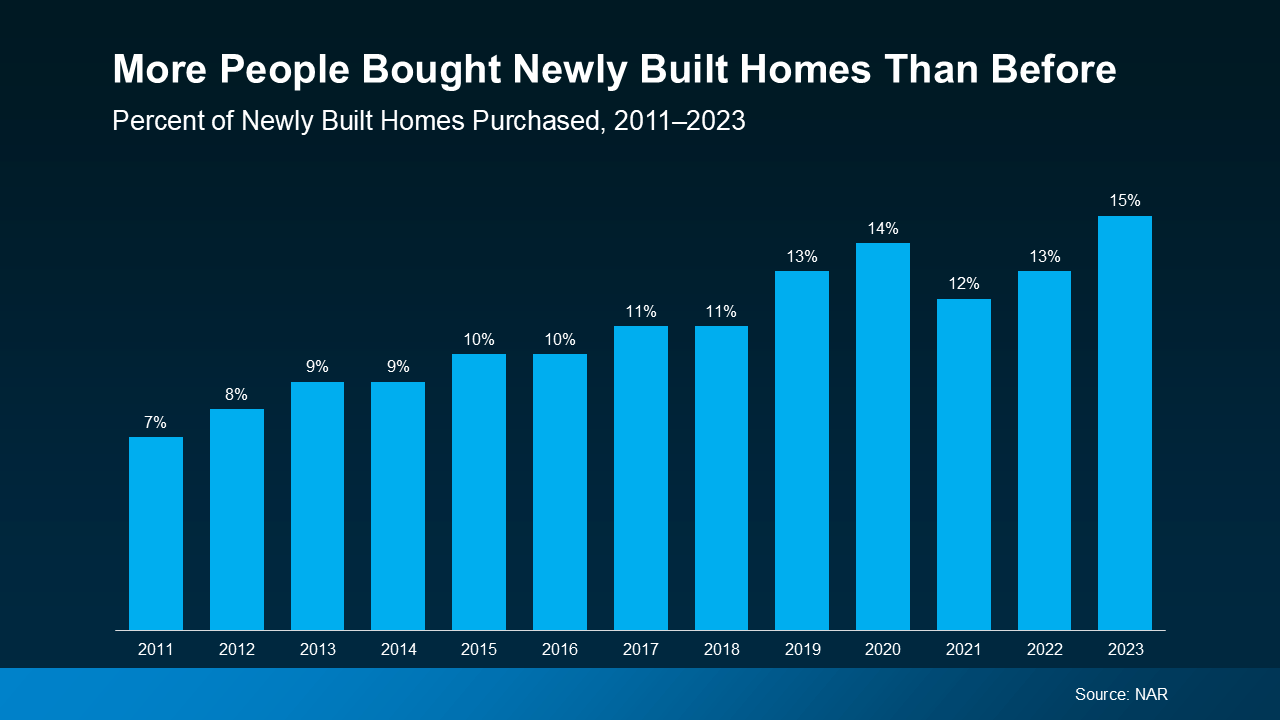
Right now, the number of existing homes for sale is still low. And, if you’re struggling to find something you like because there aren’t that many existing homes for sale, opening up your search to include brand-new homes could really expand your options. That’s because there are more newly built homes available right now than in a typical year (see graph below):

a graph of blue lines and white textFrom 1983 to 2019, newly built homes made up only 13% of the total inventory of homes for sale. Today, that number has climbed to 28.8%, according to the most recent data.

And as Lawrence Yun, Chief Economist at the National Association of Realtors (NAR), notes:

“Even though existing home sales have been stuck at low levels, newly constructed home sales look to mark one of its best annual performance in 15 years . . . The new home inventory has been consistently rising with homebuilders getting active and making up around 1/3 of total inventory.” 

While the uptick in new home construction is encouraging, rest assured that builders aren’t overdoing it, they’re just making up for over a decade of underbuilding. There are still way more buyers than there are homes on the market. But the good news for you is this increase in newly built homes means more options for your search.

2. Newly Built Homes Are Becoming Less Expensive

Still skeptical if a new build is right for you or if they’re even in your budget? The average cost of newly built homes has actually come down from a year ago.

Why is that? Builders know affordability is top of mind for homebuyers right now. So they’re focusing their efforts on building smaller homes they can offer at lower price points and are more likely to sell. As Realtor.com says:

“Builders are increasingly bringing smaller, more affordable homes to the market, so buyers may find more newly-built homes that fit their budget.” 

Something to keep in mind: buying a newly built home isn’t the same as buying an existing one. Builder contracts have different fine print. So be sure to partner with a local agent who knows the market, builder reputations, and what to look for in those contracts.

Bottom Line

Depending on your needs and budget, a new build might be the opportunity you’ve been waiting for to bring your homebuying vision to life. If you’re interested in a brand-new home, let’s connect so you can check out what builders in your area are up to.

Uncategorized December 11, 2024

Why More Sellers Are Hiring Real Estate Agents


Putting your house for sale on your own – often called “For Sale by Owner” or FSBO – might be on your mind. But you should know it gets complicated quickly, especially in today’s complex market.

That’s why data from the National Association of Realtors (NAR) shows a record low number of people are selling independently.

Instead, more and more homeowners are choosing to work with a real estate agent (see graph below):

a graph of a sales growthAnd here’s why partnering with an expert is the go-to choice. Selling your home is a big deal, and while FSBO might seem like a way to save time or money, it comes with many responsibilities.

The selling process requires setting the right price, navigating a growing amount of legal paperwork, and creating a solid strategy to attract buyers. And going it alone often means taking on more than you bargained for.

Let’s examine two reasons why working with a pro can make all the difference.

1. Getting the Price Right

One of the biggest hurdles when selling a house alone is determining the right price. It’s not as simple as picking a number that sounds good – you need to hit the bullseye. Price your home too high, and buyers may overlook your listing. If you price it too low, you could leave money on the table or even raise red flags about the condition of your home.

Real estate agents are experts in finding the right price for today’s market trends. As Zillow explains:

“Agents are pros when it comes to pricing properties and have their finger on the pulse of your local market. They understand current buying trends and can provide insight into how your home compares to others for sale nearby.”

With their knowledge of the local market, buyer behavior, and what homes like yours are selling for, an agent will help you set a competitive price that will draw in buyers. And it’s that perfectly strategic price that’ll set the stage for selling at top dollar.

2. Understanding and Managing the Paperwork

Another part of the process deals with a growing stack of paperwork, from disclosure forms to contracts. Each document must be completed accurately, and there are legal requirements to follow that can feel overwhelming if you’re unfamiliar with them.

This is another area where an agent’s expertise shines. They’ve handled these documents countless times and know exactly what’s needed to keep everything on track. Your agent will guide you through the paperwork step by step to ensure it is done right the first time and that you understand what you’re signing. With their help, you can avoid unnecessary stress and mistakes leading to delays, legal complications, and more.

Bottom Line

Selling your house is a big decision, and having a trusted real estate agent on your side can make all the difference.

Let’s connect so you have a pro to help with everything from pricing your home to managing the details. That way, we can take the guesswork out of the process and help you sell confidently.

Uncategorized December 10, 2024

What Will It Take for Prices To Come Down?

You may be wondering if home prices are going to crashBelieve it or not, some people might even be hoping this happens so they can finally purchase a more affordable home. But experts agree that’s not what’s in the cards—and here’s why.

More people want to buy a home than there are homes available to purchase, which drives prices up.

Let’s break that down and explore why home prices aren’t going to come down anytime soon, nationally.

Prices Depend on Supply and Demand

The housing market works like any other market – prices rise when demand is high and supply is low.

According to the latest estimates, the U.S. faces a housing shortfall of several million homes. That means there are far more people looking to buy (demand) than there are homes for sale (supply). That mismatch is the key reason why prices won’t fall at the national level. As David Childers, President of Keeping Current Matters (KCM), puts it:

“The main driving force on pricing is the limited amount of inventory in most markets across the country. That issue is not going to be solved overnight or in the next twelve months.”

How Did We Get Here?

For over 15 years, homebuilders haven’t been building enough homes to keep up with buyer demand. After the 2008 housing crisis, homebuilding slowed significantly, and it’s only recently started to recover (see graph below):

a graph of a number of yearsEven with new construction on the rise over the past few years, builders are playing catch-up. And according to AmericanProgress.org, they’re still not even keeping up with today’s demand, let alone making up for years of underbuilding.

And as long as there’s a housing shortage, home prices will remain steady or increase in most areas.

What About Next Year?

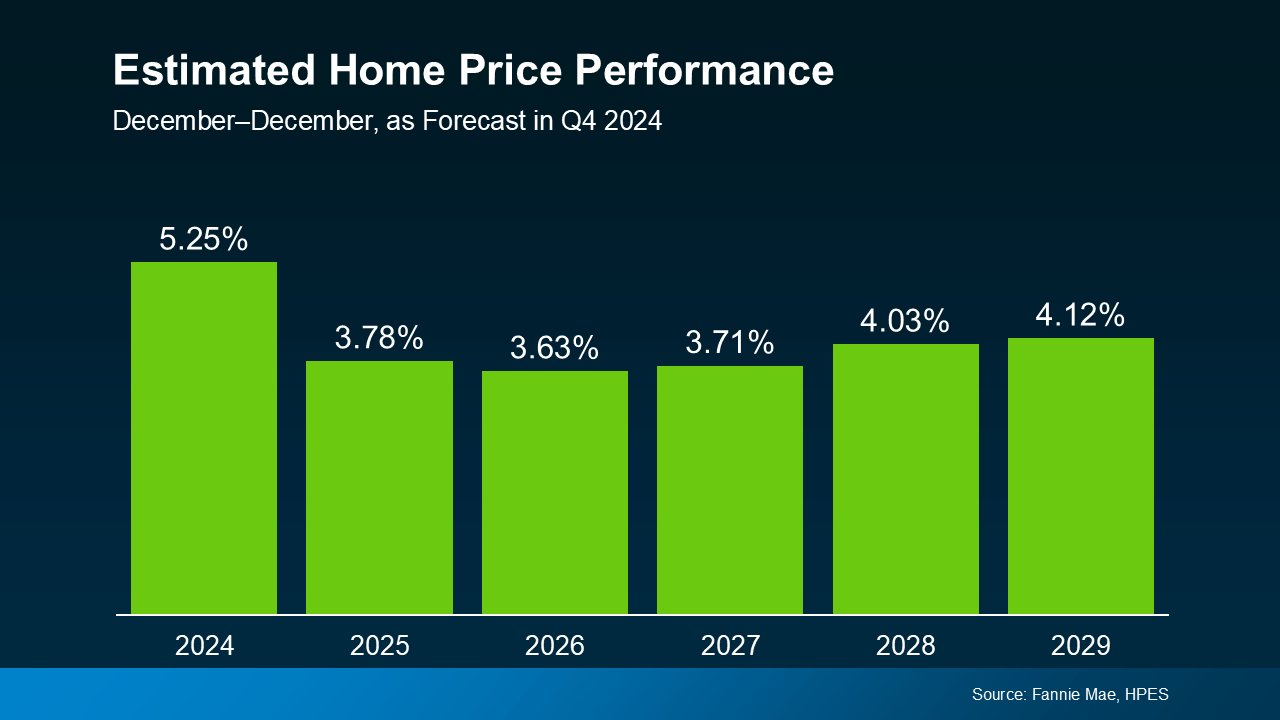
The majority of experts agree prices will keep rising next year, but at a much slower, healthier pace (see graph below):

a graph of green barsBut it’s important to note home prices vary by market. What happens nationally might not reflect exactly what’s happening in your area. If your local market has more inventory available, prices could grow more slowly or even decline slightly. But in areas where inventory remains tight, prices will keep climbing – and that’s what’s happening throughout most of the country. That’s why it’s crucial to work with a local real estate expert who understands your market and can explain what’s going on where you live.

Bottom Line

If you’re wondering what it’ll take for prices to come down, it all goes back to supply and demand. With inventory still limited in most markets, prices are likely to remain steady or rise.

To see what’s happening with home prices where we live, let’s connect. That way you’ll have help understanding our market and making a plan that works for you.

PlayPlay