Uncategorized January 1, 2025

New Year, New Home: How To Make It Happen in 2025

This is when many people take a moment to reflect and set their goals for this year. And as you picture what you want your 2025 to look like, one thing that may pop into your mind is the vision of you in a new home. But how do you get there? And where do you start?

Here’s some advice that can help you get the ball rolling.

Focus on Your Why

To lay the foundation, you need to focus on your why. While the dollars and cents are important, so is the driving force behind your desire to move. Maybe you need more space for a growing family, want to sell so you can downsize, or are finally ready to buy your first home. Whatever your reason, it’s important to keep it front and center.

Your why is what helps you stay focused. Share your motivation with your agent, and they’ll use their expertise to help support that goal, no matter what the market looks like. With a great agent by your side, you’ll have someone to guide you, problem-solve, and keep you moving forward until you can check that goal off your to-do list.

Get Clear on What You Need

Then, it’s time to figure out what your next home needs to have. How many bedrooms do you need? If you don’t have a designated home office, is that a deal-breaker? What about a big fenced-in backyard? Knowing your must-haves and nice-to-haves makes the search a lot smoother.

Since affordability is still tight, having a clear idea of your essential items is important. Maybe you can flex a bit on location if it’s got everything else you’re looking for. Go over those essential items with your agent, and they’ll help you focus on the homes that check the boxes that matter most while staying within your price range.

Know Your Numbers

Before you jump in, take a look at your finances. How much have you saved? What monthly payment feels comfortable? Getting clear on your budget early will help you know what’s possible.

The best way to do this is by partnering with trusted real estate professionals, like local agents and lenders. They’ll help you:

  • Plan for your down payment and look into down payment assistance programs
  • Understand the equity you have in your current home and how you can use it to fuel your next move if you’re selling
  • Get pre-approved for a mortgage so you know what you can borrow

Lean on a Pro To Guide You

It can be hard to know where to start, but you don’t have to do it alone. A real estate agent knows what you need to do to get ready to buy or sell and how to navigate the process, and can answer your questions every step of the way. As Bankrate puts it:

“. . . now more than ever, it’s smart to lean on the guidance of an experienced local real estate agent. If you want to enter the housing market in 2025, whether as a buyer or a seller, let a pro lead the way for you.”

Remember, buying or selling is a significant milestone and a great goal for this year. You’ll feel confident and ready to take on the market with the right expert on your team.

Bottom Line

If buying or selling a home is part of your goals for 2025, now’s the time to get started. Focus on your why, know what you need, and connect with trusted pros to make it happen. Let’s team up and make this the year you accomplish your real estate resolutions.

Uncategorized December 30, 2024

How Eco-Friendly Features Can Boost Your Home’s Value


Selling your house? Or are you just looking to increase the value and appeal of your home when you do? You should know that homebuyers are increasingly looking for homes with environmentally friendly features.

What Energy Efficient Features Do Buyers Want?

According to recent data from the National Association of Realtors (NAR), when buyers think about eco-friendly features, they’re looking for (see visual below):

a blue and white rectangles with white text

  • Heating and cooling costs: 82% of buyers consider heating and cooling costs one of the most important factors when looking for a home. Efficient heating and cooling systems with programmable thermostats can significantly lower monthly energy bills.
  • Windows and doors with proper insulation: These help maintain comfortable indoor temperatures without overworking the HVAC system, saving energy bills.
  • Energy-efficient lighting and appliances: These can save money on utility bills and reduce overall energy use.
  • Commuting costs and environmentally friendly community features: Living in a community designed with energy-saving amenities and shorter commutes can reduce expenses and environmental impact.
  • Landscaping for energy conservation: Strategically placed trees and shrubs can lower cooling costs in the summer.
  • Solar panels: Solar panels can also provide long-term savings and are attractive for eco-conscious buyers.

The common theme? Environmentally friendly features are popular with buyers because they help them save money and make homes more comfortable. But making some of these updates before you sell your house doesn’t just benefit buyers; it’s worthwhile for you, too.

How Green Features Benefit You

If your appliances or systems are aging, upgrading them can allow you to enjoy the savings and comfort of staying in your home.

The U.S. Department of Energy has introduced Home Energy Rebates, saving households up to $14,000 on energy-efficient upgrades such as insulation, duct sealing, heat pumps, and more. These rebates make improving home efficiency more affordable than ever.

Then, when you decide to, you’ll reap the rewards again. Energy-efficient homes stand out in a competitive market and appeal to the growing group of environmentally conscious buyers.

Studies also show that homes with energy-efficient upgrades, such as high-efficiency HVAC systems or modern insulation, are more desirable for buyers and generally sell for a higher price. Research from Freddie Mac found that homes with high energy-efficiency ratings sold for an average of 2.7% more than homes without these upgrades.

Work with a Real Estate Agent to Maximize Value

I’m unsure which upgrades to prioritize where a local real estate agent comes in. They can help you identify the eco-friendly features that buyers in your area value most. Whether adding Energy Star appliances or improving insulation, they will guide you in making the best choices for your house and your budget.

Bottom Line

Making environmentally friendly upgrades can pay off in many ways. You can enjoy saving on energy bills and improved comfort now. You’ll also be satisfied knowing you’re contributing to a more sustainable future while adding value to your home. Ready to learn more about how you can make your house stand out? Let’s connect.

Uncategorized December 27, 2024

Why More Sellers Are Hiring a Real Estate Agent

Uncategorized December 26, 2024

What’s Motivating More Buyers To Choose a Newly Built Home?

Planning to buy a home soon? Why not go for something brand-new? Because data shows many more buyers are seeing the appeal of new home construction these days, you may find out it’s what you want, too.

The National Association of Realtors (NAR) explains that newly built homes accounted for 15% of all homes sold last year. That’s a significant increase and is the highest percentage in 17 years (see graph below):

a graph of blue barsNAR surveyed recent buyers to get a closer look at why so many people are opting for a brand-new home. And here are the top reasons why new builds gained so much popularity (see graph below):

a graph of blue squares Avoiding Renovations or Problems with Plumbing or Electricity (42%)

According to buyers, the first benefit is the peace of mind that comes with getting everything brand-new. Because, let’s face it, buying a home right now is pricey. And with inflation also putting a pinch on your wallet, you want to do everything you can to cut down on additional costs. Enter new builds.

A home that was just built is less likely to have unexpected repairs, which means less maintenance you’ll need to budget for upfront. Plus, since many builders include warranties on their homes, that’s an added layer of protection for your wallet on some of the home’s major systems.

Ability To Choose and Customize Design Features (27%)

You may also personalize parts of the build to your unique tastes. That can be as small as which knobs go on the cabinets and which light fixture goes in the dining room to as big as floor plans and siding color. So, if you’re not finding a home you like, it may be time to build one.

The Amenities of New Home Construction Communities (25%)New development offers amenities like parks, pools, fitness centers, and community spaces. These features could help you feel more connected to your neighborhood and be a great lifestyle perk.

Lack of Inventory of Previously Owned Homes (15%)

Since the supply of existing homes (homes that were previously lived in) is still lower than the norm, more people are asking their agents if they can see what builders have available – and builders aren’t disappointed. New builds make up a more significant portion of the homes available for sale than the norm. So, checking out these homes can open up your pool of options. And don’t worry – builders are not overbuilding. They’re just catching up after years of underbuilding.

Energy Efficiency (14%)

Not to mention, newly built homes usually have the latest energy-efficient materials and technologies. This feels good and can lead to lower utility bills and a reduced environmental footprint. In a U.S. News Real Estate interview with Kevin Morrow, Senior Program Manager at the National Association of Home Builders (NAHB), this topic came up:

“The more energy-efficient mechanics of the house also help reduce utility bills for new home buyers . . . Newly-constructed homes often include green systems and appliances—like high efficiency stoves, refrigerators, washing machines, water heaters, furnaces, or air conditioning units—that homes built years ago might not.”

Smart Home Features (11%)

The integration of innovative technologies is last on this list. Tech-savvy buyers often want the latest advancements, and new home construction usually delivers.

The Importance of Using Your Agent

Newly built homes are becoming a top pick for buyers, and it’s easy to see why. If you’re feeling motivated to see what’s out there, remember you must have your real estate agent.

Builder contracts often have some complex terms and complicated fine print. If you bring your agent, you’ll have someone to advocate for you, make sure you’re getting quality construction, and guide you through the process from start to finish.

Bottom Line

Imagine skipping the hassle of renovations and having the freedom to choose the exact design features you want. If this sounds good to you, let’s connect to make sure you have an agent to help you negotiate with the builder so you can confidently buy a new home.

Uncategorized December 24, 2024

The #1 Reason People Move: To Be Closer to Family and Friends


Have you ever considered packing up and moving to be closer to the people who mean the most to you? Maybe you’re tired of long drives to see your family or wish your kids could spend more time with their grandparents. A lot of other people feel the same way.

According to recent data from the National Association of Realtors (NAR), the desire to be near family and friends is the #1 reason people move (see graph below):

a screen shot of a graphThat’s because moving isn’t just about finding a new house – it’s about living where you’re surrounded by the people who matter most. Living near loved ones changes everything, whether it’s catching up over weeknight dinners, watching your kids play with their cousins, or just knowing someone’s there when you need them.

Let’s dive into why so many people are making this move and how it could be the best decision for you, too.

Why Family Comes First

Living near family and friends is a universal motivator that applies to all buyers, whether buying their first home or making a significant lifestyle change.

But it’s essential to repeat buyers. Unlike first-time homebuyers, who may be more focused on looking in more affordable areas, repeat buyers often have more flexibility on where they live. Many Baby Boomers, for example, have built significant equity in their homes, allowing them to prioritize what matters most – like retiring near their grandkids. As Ali Wolf, Chief Economist at Zondasays:

“25% of Baby Boomer households plan to retire near their children and grandchildren . . .”

Moving closer to friends and family is about creating a meaningful next chapter in your life in which loved ones are just around the corner.

The Benefits of Living Near Loved Ones

But moving closer isn’t just a lifestyle choice – it’s a decision that offers tangible benefits:

  1. Spending More Time Together Whether it’s joining family dinners, going to weekend activities, or simply having someone nearby to talk to, these moments strengthen relationships and make life more fulfilling.
  2. Sharing Resources Living close to family can also provide practical advantages, such as sharing childcare, tools, or household items.
  3. Cutting Down on Travel Instead of spending hours on the road to spend time together, you can enjoy more spontaneous visits. This not only enhances your quality of life but also provides peace of mind in case of emergencies.
  4. Being There for Big Moments also offers emotional and practical support during life’s milestones. Being close to loved ones helps you feel connected and cared for from graduation to tough times.

Ready To Make Your Move?

Home isn’t just a place you live – it’s where your people are. Whether you’re looking to spend more quality time with family or enjoy the practical benefits of being closer to loved ones, the decision to move closer to those you care about is aroprofoundlyrsonal.

Bottom Line

If you’re considering a change, let’s connect. Together, we can explore neighborhoods that will bring you closer to the people and places you love most.

Uncategorized December 23, 2024

How Home Equity May Help You Buy Your Next Home in Cash


Building equity in your house is one of the most significant financial advantages of homeownership. And right now, homeowners nationwide are sitting on record amounts of it.

Here’s a look at how that equity could be a game changer for you and why it’ll flip your perspective from “Why would I move right now?” to “Why wouldn’t I?

Home Equity: What Is It?

Home equity is the difference between the value of your house and the amount you owe on your mortgage. For example, if your house is vworth$400,000 and you only owe $200,000 on your mortgage, your equity would be $200,000.

Why Equity Is Such a Big Deal for Homeowners Looking To Sell

Recent data from the Census and ATTOM shows how significant today’s home equity is. More than two out of three homeowners have either completely paid off their mortgages (shown in green in the chart below) or have at least 50% equity in their homes (shown in blue in the chart below):

a pie chart with textAnd that’s a big deal. Think about it: 2 out of 3 homeowners have at least 50% home equity. To put a more tangible number on it so you can think about what that means for someone like you, CoreLogic shows the average homeowner has built up $311,000 worth of equity. That net worth can go a long way if you’re trying to make a move.

And that’s part of why the share of all-cash buyers recently reached a new high. According to an annual report from the National Association of Realtors (NAR), 26% of buyers were able to buy without a mortgage (see graph below):

a graph with numbers and linesImagine buying your next house in cash. No mortgage. No monthly payment. There is no interest rate to mess with. If you want to find out how much equity you have to see if that’s an option, connect with a real estate agent and ask for a professional equity assessment report (PEAR).

Who knows, you may find out you have enough equity to buy your next place outright– and with today’s mortgage rates, not having to take out a home loan is pretty incredible. Even if you don’t have enough equity to buy in all cash, you may still have enough to make a larger down payment, which also has its benefits.

Bottom Line

Homeowners have an incredible amount of equity today – and that’s why the share of all-cash buyers is on the rise. To see how much equity you have and talk through how it can help fuel your next move, let’s connect.

Uncategorized December 20, 2024

Assistance programs for First-Time home buyers

Utah offers several programs designed to help first-time homebuyers overcome financial barriers. These programs focus on down payment assistance, affordable mortgage options, and educational resources. Here’s an overview of key assistance programs available in Utah:


1. Utah Housing Corporation (UHC) Programs

The Utah Housing Corporation is a primary source of assistance for first-time buyers in Utah. Their programs are designed to help with down payments, offer competitive mortgage rates, and support low- and moderate-income households.

Key Programs:

  • FirstHome Loan Program:
    • Specifically for first-time homebuyers.
    • Provides affordable fixed-rate loans with down payment assistance.
    • Income and purchase price limits apply.
  • HomeAgain Loan Program:
    • Designed for repeat buyers but available to first-time buyers as well.
    • Offers down payment assistance with slightly more flexible requirements.
  • Score Loan Program:
    • Targets buyers with lower credit scores.
    • Requires a slightly higher interest rate but still offers down payment assistance.

Down Payment Assistance:

  • UHC programs provide loans for down payments and closing costs.
  • Assistance is structured as a second mortgage with low monthly payments.

2. Federal Housing Administration (FHA) Loans

While not Utah-specific, FHA loans are popular among first-time buyers.

  • Require a lower down payment (as low as 3.5%).
  • More flexible credit score requirements (typically 580+).
  • Buyers in Utah often pair FHA loans with state assistance programs.

3. USDA Rural Development Loans

For buyers in rural or suburban areas of Utah, USDA loans offer:

  • Zero down payment.
  • Low interest rates.
  • Income limits apply, and the property must be in a USDA-eligible area.

4. Veterans Affairs (VA) Loans

If you’re a veteran or active-duty service member, VA loans offer:

  • Zero down payment.
  • Competitive interest rates.
  • No private mortgage insurance (PMI) requirement.

5. Homebuyer Education Courses

Many assistance programs require completing a homebuyer education course. These courses teach budgeting, mortgage basics, and home maintenance.

Examples:

  • Utah Housing Corporation’s Online Courses.
  • NeighborWorks America: Offers HUD-certified courses and counseling.
  • Community Development Corporations (CDCs): Local organizations provide workshops and individual coaching.

6. Local Programs by Cities or Counties

Certain cities or counties in Utah offer their own homebuyer assistance programs. Examples include:

  • Salt Lake City Down Payment Assistance Program:
    • Provides loans of up to $15,000 for down payment and closing costs.
    • Zero-interest deferred loans (repayment due upon sale or refinance).
  • Provo Housing Program:
    • Assistance for low-income families purchasing homes in Provo.
    • Offers affordable housing options and grants.
  • Ogden Home Sweet Ogden Program:
    • Provides down payment assistance for homes purchased in designated revitalization areas.

7. Tax Benefits for First-Time Homebuyers

  • Mortgage Credit Certificate (MCC):
    • Available through UHC.
    • Allows eligible first-time buyers to claim a tax credit on a portion of their mortgage interest.

How to Access These Programs

  1. Contact Utah Housing Corporation:
  2. Work with Approved Lenders:
    • Many assistance programs require working with lenders certified by the administering organization.
  3. Consult Local Housing Authorities:
    • Reach out to city or county housing departments for localized assistance.
Uncategorized December 20, 2024

The Truth About Down Payments

There’s a misconception that you must put 20% of the purchase price down when buying a home. But the truth is, many people don’t put down that much unless they’re trying to make their offer more competitive. And if you want to give your savings a boost, look into down payment assistance. Thousands of programs offer an average benefit of nearly $17,000. To learn more about loan options or down payment assistance programs, contact a trusted lender and check downpaymentresource.com.

Uncategorized December 19, 2024

Struggling To Sell Your House? Read This.

Ideally, when you sell your house, it will go smoothly: you will get top dollar for it, sell it quickly, and everything will go smoothly.

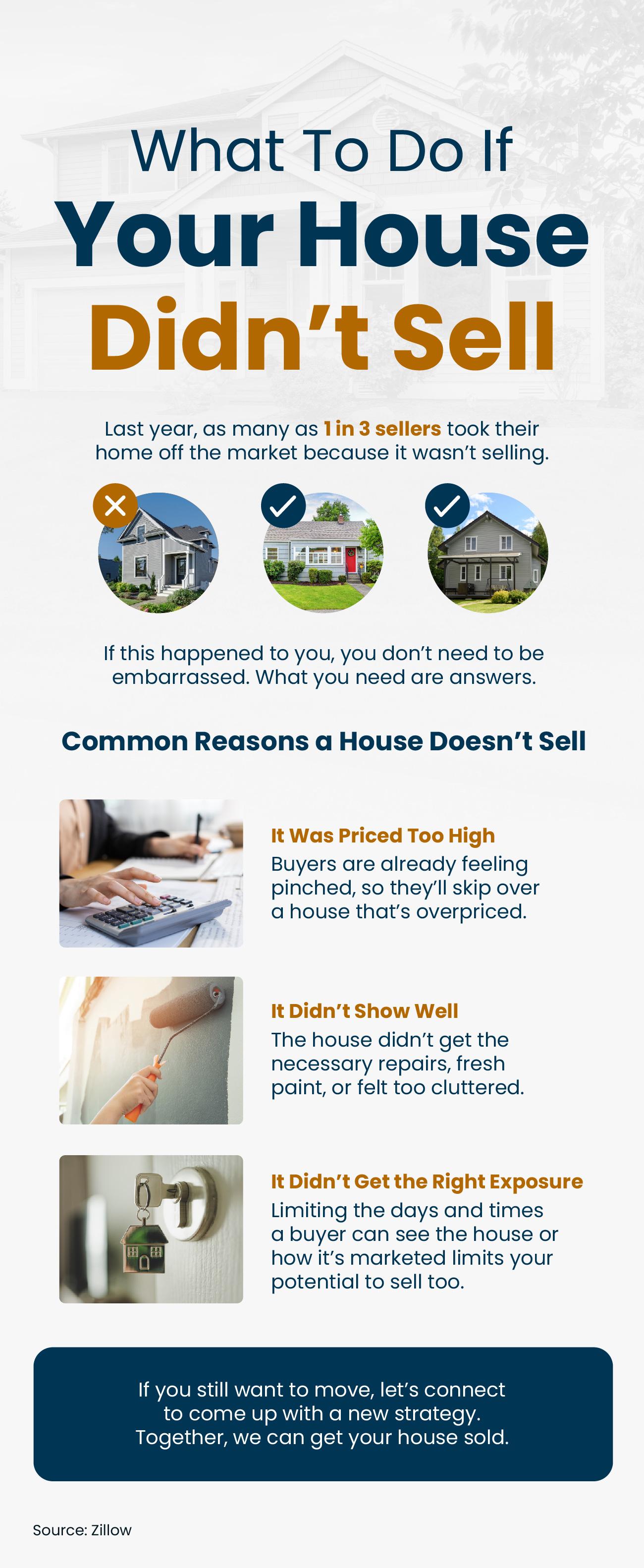
Many people don’t realize that even in today’s market, where there are more buyers than homes for sale, there are still things that can cause delays or even prevent a house from selling. According to Zillow, in 2024, as many as one in three sellers took their home off the market before it sold.

And while the reasons those houses didn’t sell will vary, some general themes come through. If you’re having trouble selling your home, here are the top three hurdles that could be getting in the way and how an expert agent can help you solve these issues.

1. Priced Too High

It’s no surprise that price plays a significant role when you sell. In today’s market, overpricing a home in a high-mortgage rate environment is the biggest thing that keeps homes on the market longer than the norm. As. U.S. News Real Estate says:

“Talk to any real estate expert, and the first thing they’ll tell you is that a house is selling slowly because the price is too high.”

While it’s tempting to push the price higher to get more for your home, overpricing can turn away potential buyers. It can also make your house sit on the market for too long. And the longer it sits, the more skeptical buyers will be that there’s something wrong, even if there isn’t.

Buyers today have so many tools and resources to view homes in your area and compare prices. So, if your house is priced too high, you’ll risk driving away potential offers.

To determine if this is happening with your listing, ask your agent what they hear at open houses and showings. If the feedback is consistent, it may be time to reevaluate your asking price. 

2. Not Freshened Up Before Listing

You only get one chance to make a great first impression on a buyer. That’s why sprucing up your house can be the difference between selling or sitting.

First, take into account your home’s curb appeal. There may be easy ways you can clean up the landscaping to make it tidy, inviting, and make an impact. As an article from Realtor.com notes:

” . . . for better or worse, buyers do tend to judge a book by its cover. You want to make sure potential buyers’ first impression of your home is a good one—and inspires them to stop by the open house or schedule a tour—so they can see more.”

But don’t stop at the front door. Small touches like removing personal items, reducing clutter, and cleaning the floors give buyers more freedom to imagine themselves in the home. And inexpensive upgrades like a fresh coat of paint or updated listing photos to match the current season can go a long way toward achieving that wow factor.

When in doubt, lean on your real estate agent for expert advice on whether you need a new game plan to close the deal.

3. Limited Access

Another big mistake you can make as a seller is limiting the days and times buyers can view your house. Because at the end of the day, if buyers can’t take a look around, your chances of selling decline — drastically.

And here’s something else: No matter what market you’re dealing with, buyers from outside the area are often highly motivated. Still, they don’t have as much flexibility or time as local buyers. So, make your house available to give it the best visibility.

Bottom Line

You deserve to check selling your house off your list of goals this year. So, if your home isn’t getting enough attention or your listing is getting stale, don’t be afraid to ask your trusted real estate agent how you can revamp your approach.

Uncategorized December 18, 2024

The Biggest Perks of Buying a Home This Winter


Waiting for perfect market conditions often means missing out. Because what you may not realize is, if you’re ready and able to buy, this time of year could actually give you an edge. Here’s why. As the weather cools down, the housing market can too – and that works in your favor.

You Likely Won’t Feel as Rushed

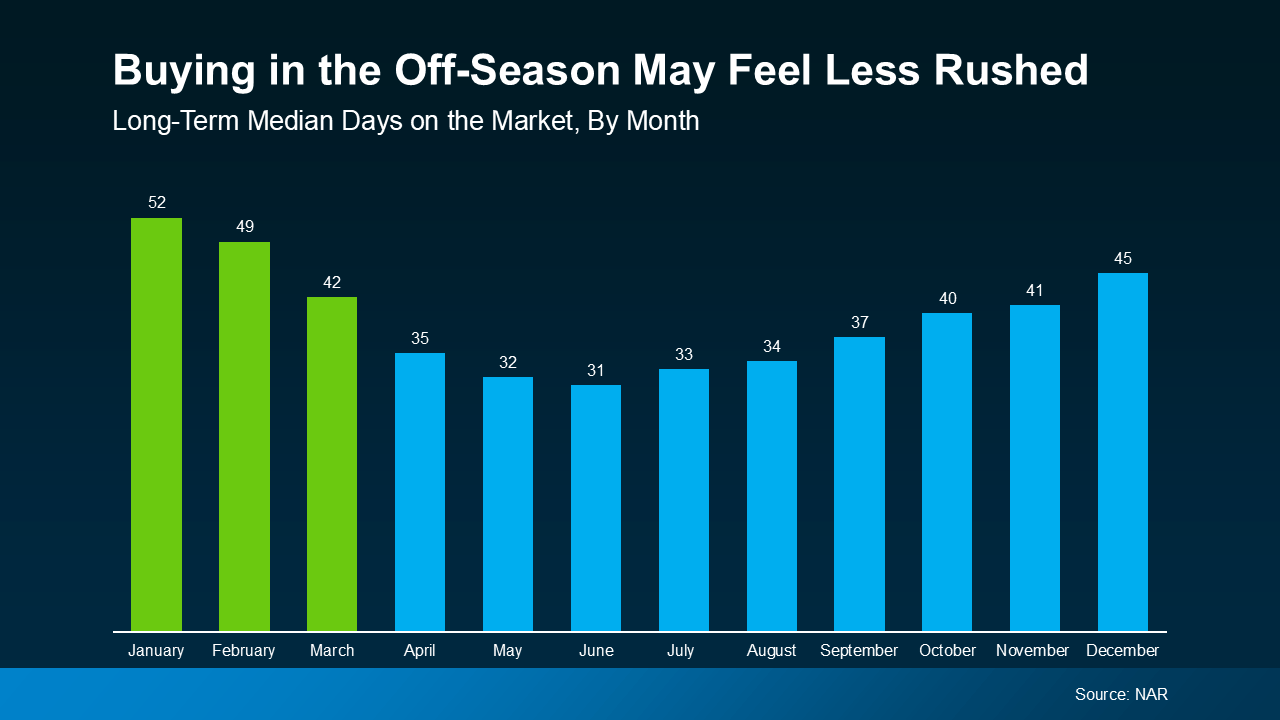
Homes tend to take a little longer to sell during this time of year. Data from the National Association of Realtors (NAR) shows the average time a house sits on the market jumps up during the winter months (see the green bars in the graph below):

a graph of blue and green barsThis is partly because fewer buyers are active at this time of year – and that decrease in buyer competition means the houses that are on the market aren’t going to be snatched up as quickly. So, if you decide to buy a home in the next couple of months, you’ll likely have more time to consider your options and negotiate a deal without feeling as pressured.

Sellers May Be More Willing To Negotiate

And since homes generally take longer to sell during the winter, sellers are often more motivated to close a deal. That can work in your favor, too. According to NAR:

“Less competition can lead to better deals. While homes are not selling as fast as during the summer, sellers may be more willing to negotiate.

Whether it’s compromising on price, covering closing costs or repairs, or including extras like appliances, you have more room to ask for what you need.

Homes Are Less Expensive in the Winter

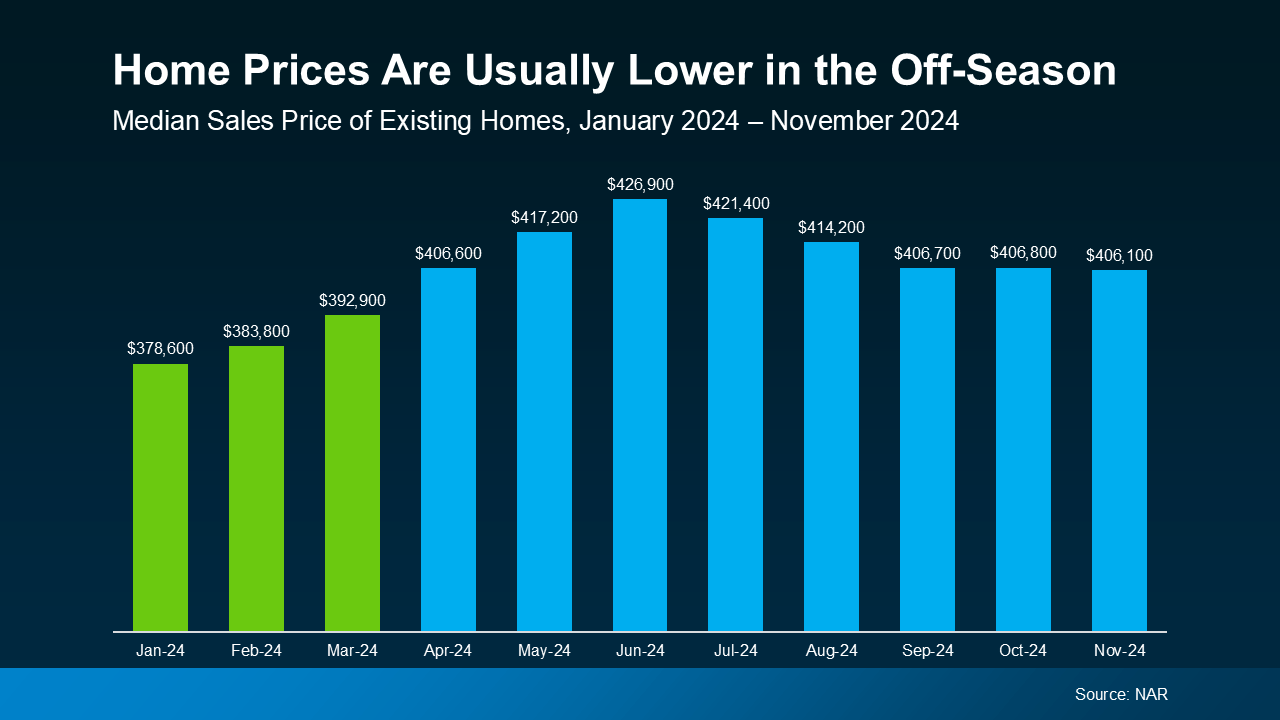
With less competition from other buyers and sellers who are more willing to negotiate, you may see slightly lower prices too. In fact, according to NAR, homes are typically about 5% less expensive now compared to when prices normally peak in the summer.

That might not seem like a huge difference, but on a $400,000 home, it could mean savings of $20,000 on the purchase price.

You can see this expected seasonal shift in home prices taking place this year. Take a look at the graph below showing the median sales price of existing homes (homes that were previously owned) over the past 12 months. You’ll notice in the green bars that prices were lower in the winter months last year, and it seems like that’s going to happen again this year. That gives you the chance to make your budget go further:a graph of a number of people

Bottom Line

Buying a home during the winter means less competition, motivated sellers, and potentially lower prices, too. Let’s work together to find the right one at the right price for you.