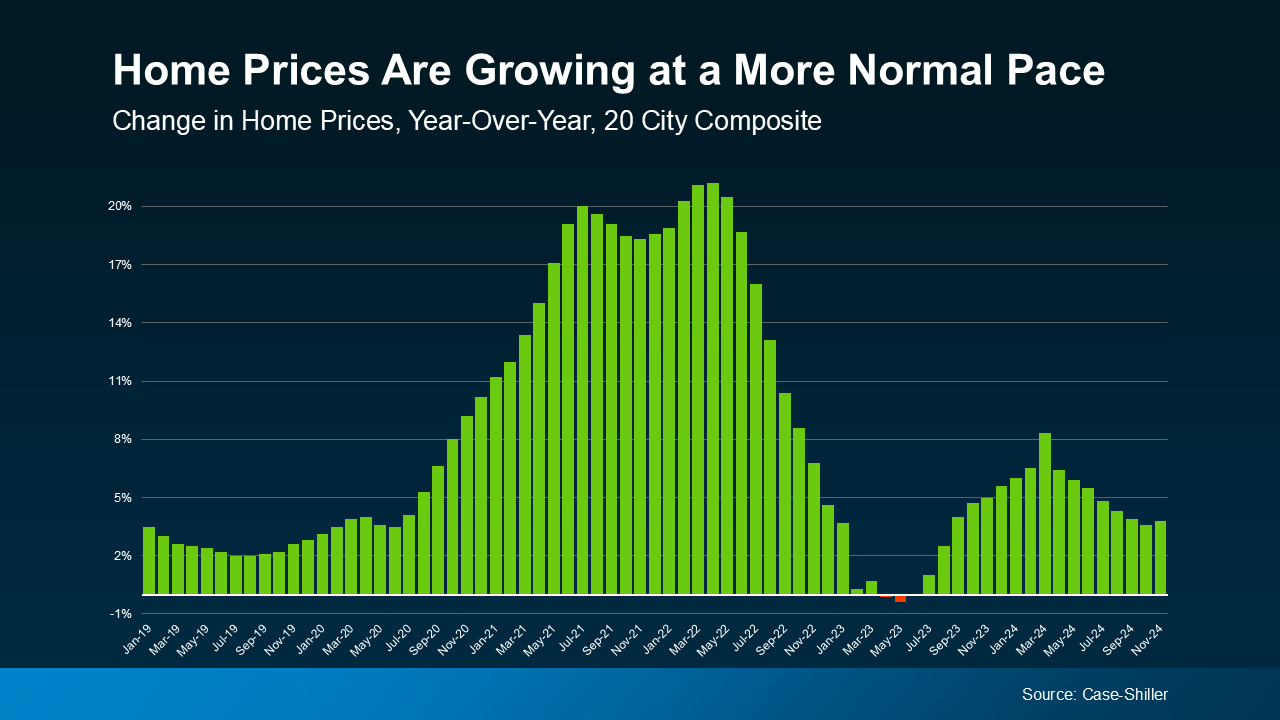
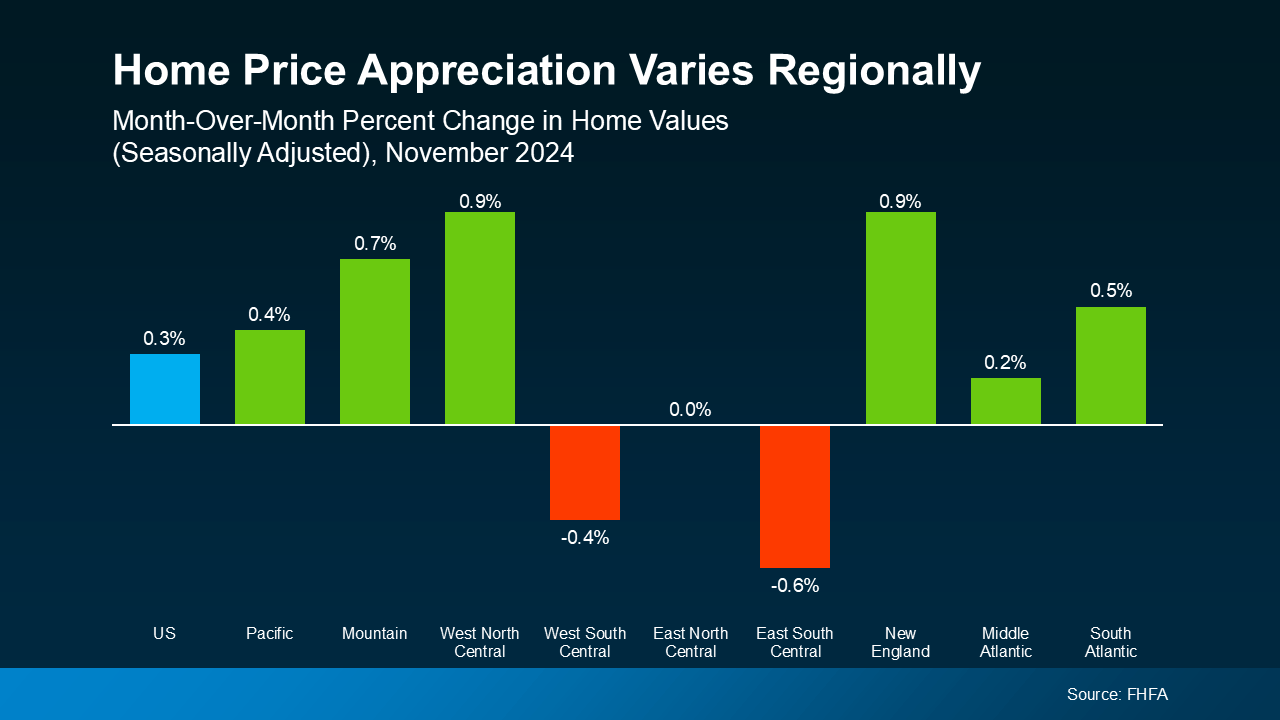
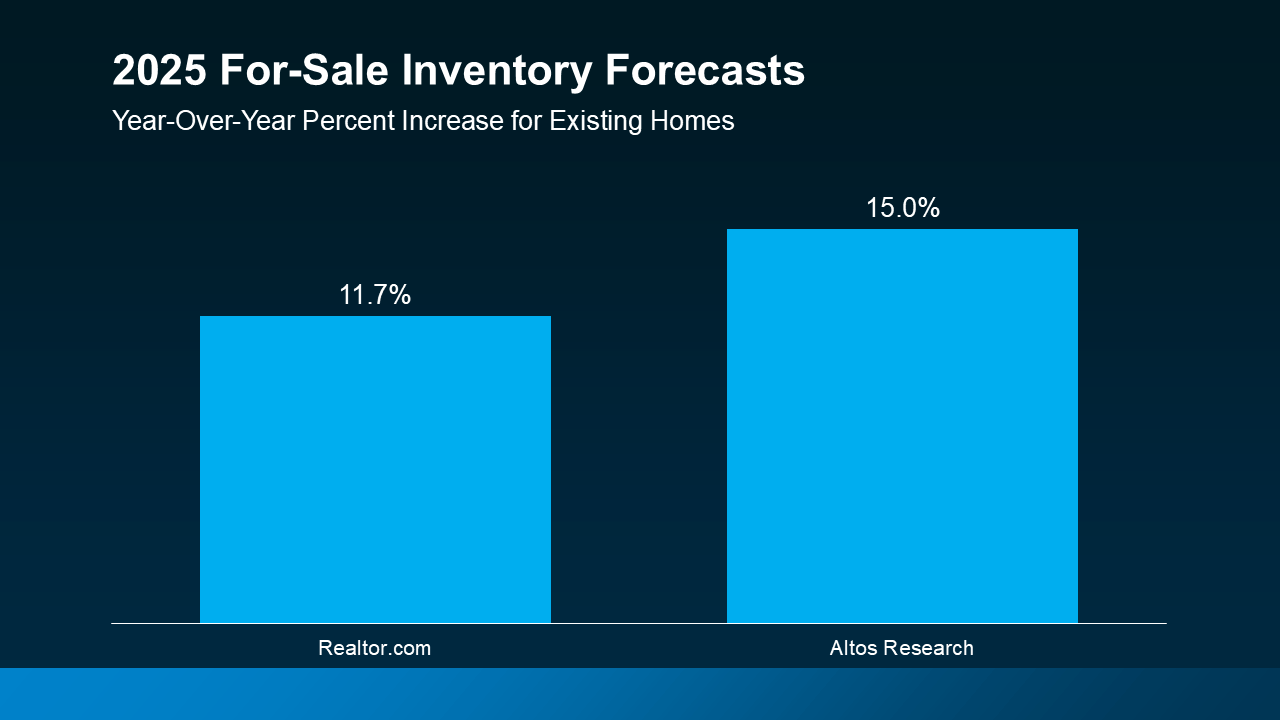
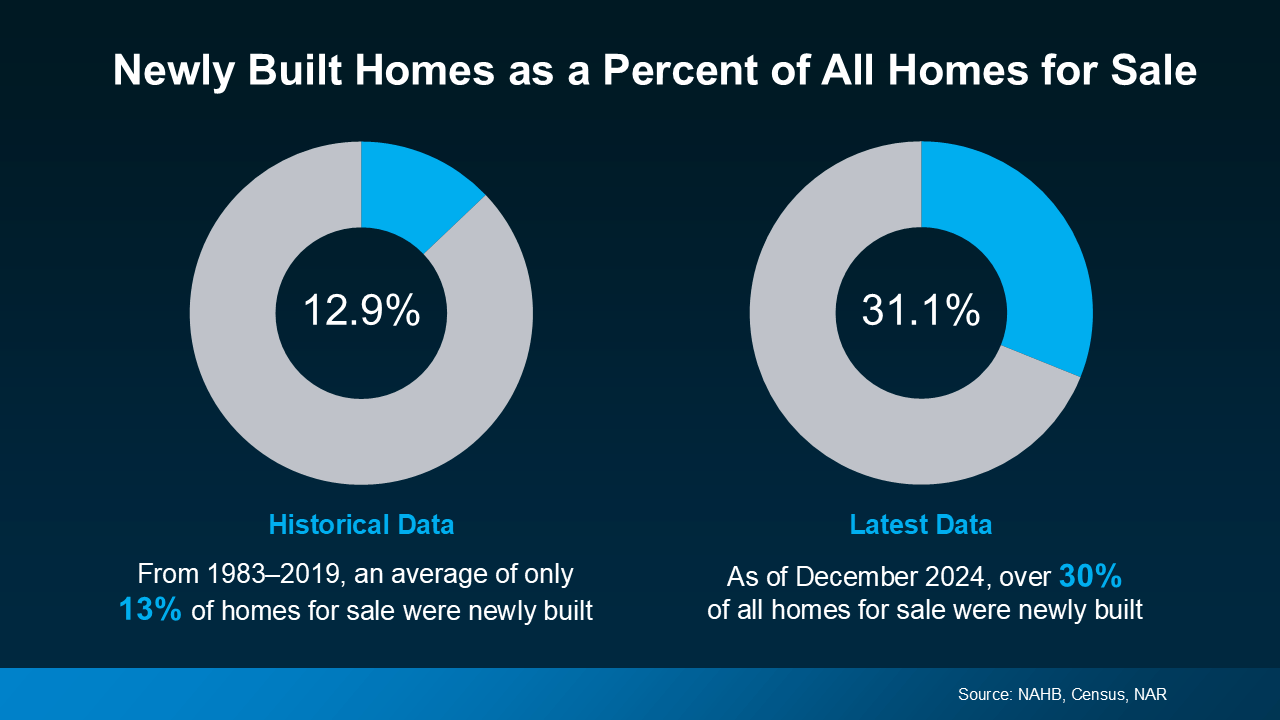
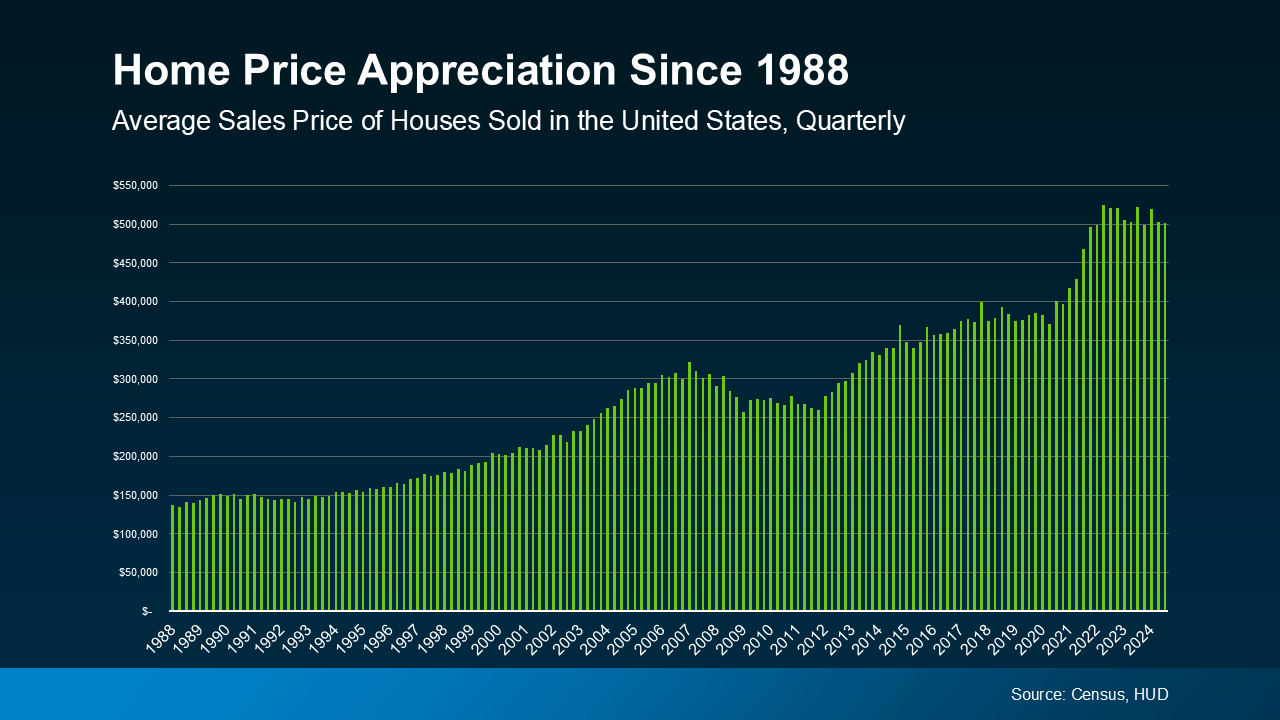
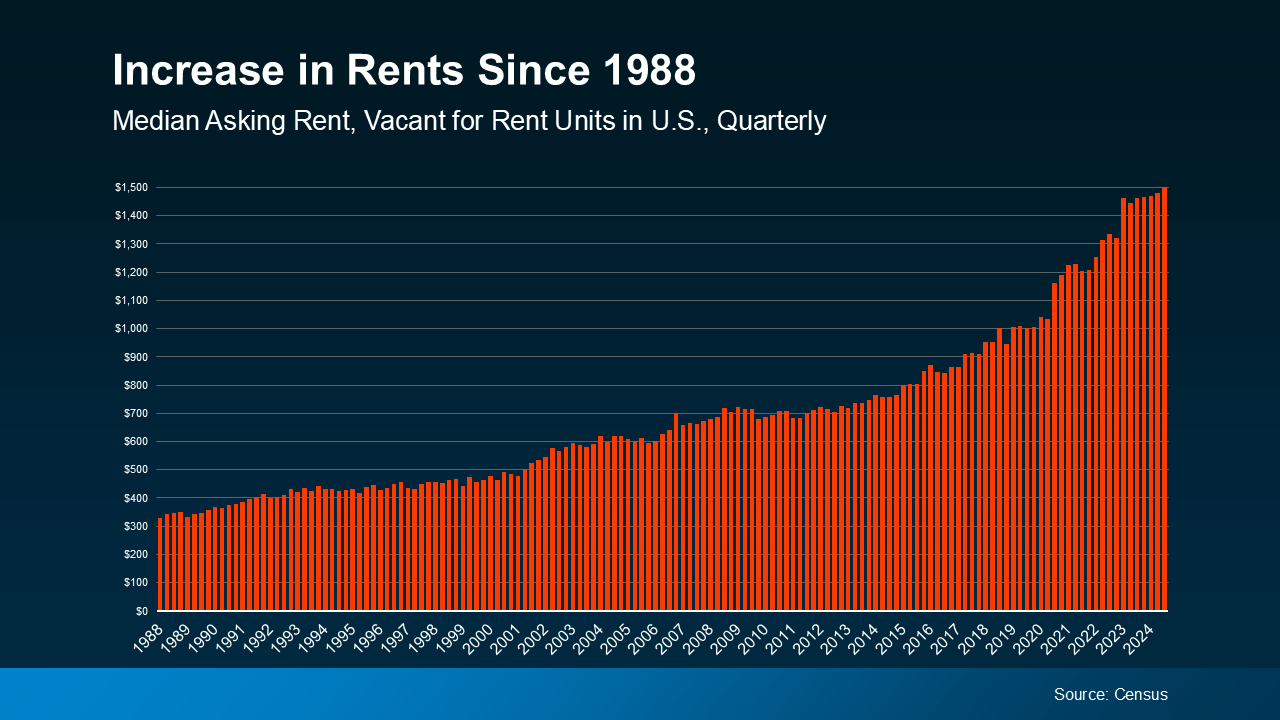
The latest 2025 forecasts show mortgage rates are projected to come down
slightly, prices are forecast to rise, and more homes will be available for sale.
Want to know more about what this could mean for your plans this year?
Let’s connect.

You may not know much about one essential step in the home-buying process: pre-approval. Here’s a rundown of what it is and why it’s necessary.
Pre-approval is like getting a green light from a lender. It lets you know how much they will let you borrow for a home. To determine that number, a lender looks at your financial history. According to Realtor.com, these are some of the documents a lender may ask you for during this process:
The result? You’ll get a pre-approval letter showing what you can borrow. Remember that any changes in your finances can affect your pre-approval status. So, after you receive your letter, avoid switching jobs, applying for new credit cards or other loans, or taking out large sums of money from your savings.
This year, home prices are expected to rise in most places, and mortgage rates are still showing some volatility. So, since affordability is still tight, it’s a good idea to talk to a lender about your home loan options and how today’s changing mortgage rates will impact your future monthly payment.
The pre-approval process is the perfect time for that. Because it determines the maximum amount you can borrow, pre-approval also helps you determine your budget. You should use this information to tailor your home search to what you’re comfortable with regarding a monthly mortgage payment. That way, you don’t fall in love with a house out of your comfort zone.
Once you find a home you want to offer, pre-approval has another big perk. It strengthens your offer and shows sellers you’ve already undergone a credit and financial check.
When a seller sees you as a serious buyer, they may be more attracted to your offer because it seems more likely to go through. As Greg McBride, Chief Financial Analyst at Bankrate, says:
“Preapproval carries more weight because it means lenders have actually done more than a cursory review of your credit and your finances, but have instead reviewed your pay stubs, tax returns and bank statements. A preapproval means you’ve cleared the hurdles necessary to be approved for a mortgage up to a certain dollar amount.”
If you plan on buying a home, getting pre-approved for a mortgage should be one of the first things on your to-do list. It will give you a better understanding of your borrowing power and put you in the best position possible to make a strong offer when you find a home you love. Connect with a trusted lender to learn more.

Are you hesitant to sell your house because you worry no one will buy at current rates and prices? Here’s some perspective that can help.
The market isn’t at a standstill. While there were fewer sales last year than in a normal market, roughly 4 million homes still sold (not including new construction), according to the National Association of Realtors (NAR). The number is expected to rise in 2025. That means more people will likely move this year and need homes to buy—like yours.
But even if we only match last year’s sales pace, here’s what that looks like.
Think about that. Just in the time it took you to read this, 8 homes sold.
If you’ve eighteen holding off on selling your house because you think buyers aren’t out there, let this reassure you – there are still buyers looking to buy.
Thousands of people need to buy homes every day. While higher home prices and mortgage rates have slowed the market and forced some buyers to the sidelines, that doesn’t mean the market isn’t active. Many buyers are still eager to move because life doesn’t require perfect market conditions.
With the right agent by your side, you can get your house in front of those buyers while other hesitant homeowners still pause their plans because they’re worried buyer demand has disappeared. Let’s get your home sold.
On average, over 11,000 homes sell daily; you could be one of them. In the time it took you to read this, another 8 homes sold.
When you’reight ready to take the next step, let’s connect so you can hire an agent to create the perfect strategy.

Have you ever considered how much wealth you’ve built as a homeowner? As home values rise, so does your net worth. And, if you’ve been in your house for a few years (or longer), there’s a good chance you’re sitting on a pile of equity — maybe even more than you realize.
Home equity is the difference between what your house is worth and what you owe on your mortgage. For example, if your house is worth $500,000 and you still owe $200,000 on your home loan, you have $300,000 in equity. It’s essentially the wealth you’ve built through homeownership. Right now, homeowners across the country are seeing record amounts of equity.
According to Intercontinental Exchange (ICE), the average homeowner with a mortgage has $319,000 in home equity.
The rise in home equity over the years can be credited to two key factors:
1. Significant Home Price Growth
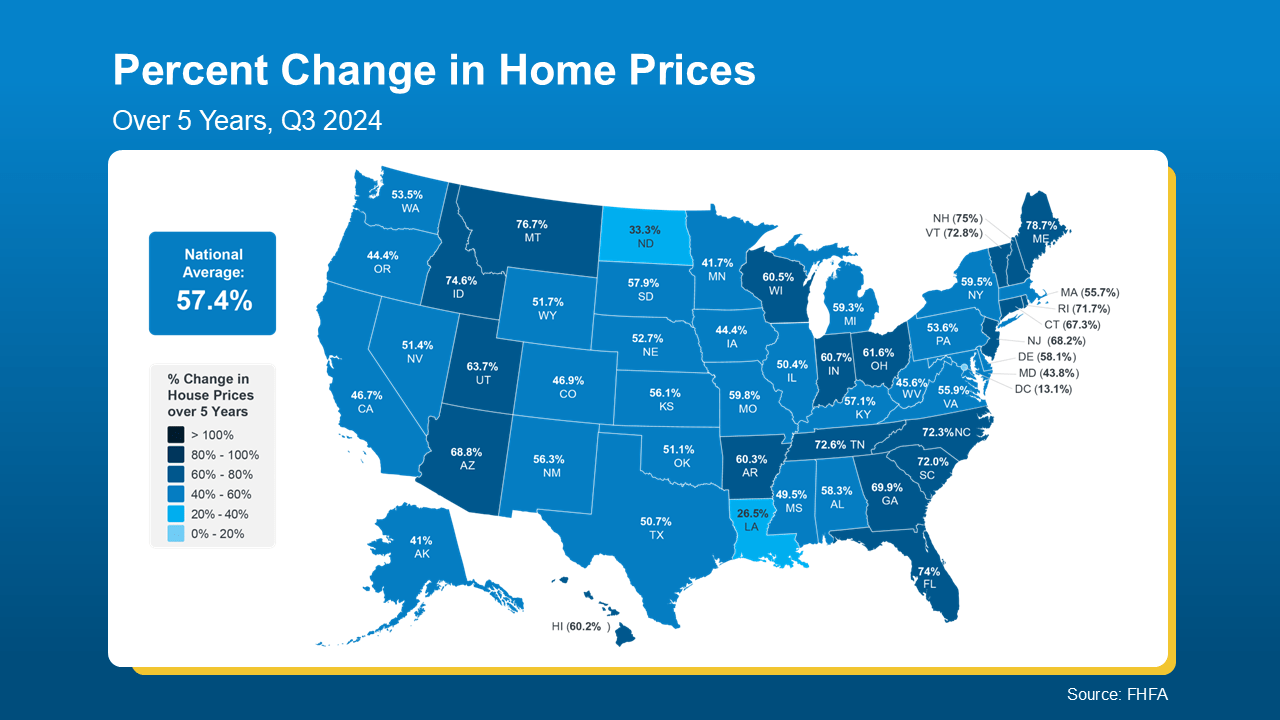
Home prices have climbed dramatically in recent years. In fact, according to the Federal Housing Finance Agency (FHFA), over the past five years, home prices nationwide have risen by 57.4% (see map below):
This appreciation means your house is likely worth much more now than when you first bought it.
2. Longer Tenure in Homes
Data from the National Association of Realtors (NAR) shows people are staying in their homes for a decade (see graph below):
This increased tenure means homeowners benefit more from home values growing over time. That’s because the longer someone has lived in their house, the more that home’s value has grown, directly increasing equity.
And if you’re one of those people who’s been in their home for 10 years or more, know this – according to NAR:
“Over the past decade, the typical homeowner has accumulated $201,600 in wealth solely from price appreciation.”
What does that mean for you? It means your house might be your most significant financial asset — and it could open up some exciting opportunities for your future. Let’s break it down.
Your equity could help you cover the down payment for your next home. Sometimes, it might even mean you can buy your next house all cash.
Are you considering upgrading your kitchen, adding a home office, or tackling other projects? Your equity can provide the funds to make those improvements happen, increasing your home’s value and making it more enjoyable to live in.
If you’ve been dreaming about starting your own business, your equity could be the kickstart you need. Leveraging your home’s value, whether for startup costs, equipment, or marketing, can help bring your entrepreneurial goals to life.
Whether you are considering selling, upgrading, or wanting to understand your options, your home equity is a powerful resource. Let’s connect and explore the possibilities if you’re wondering how much equity you’ve built or how you can use it to meet your goals.

Knowing what to budget for when buying a home may feel intimidating — but it doesn’t have to be. You can take control of the process by understanding the costs you may encounter upfront.
Here are a few things experts say you should consider as you plan ahead.
Saving for your down payment is likely at the top of your mind. But how much do you need? A common misconception is that you must pay 20% of the purchase price. But that’s not necessarily the case. You don’t have to unless your loan type or lender specifies it. There are some home loan options that require as little as 3.5% or even 0% down. An article from The Mortgage Reports explains:
“The amount you need to put down will depend on a variety of factors, including the loan type and your financial goals. If you don’t have a large down payment saved up, don’t worry—there are plenty of options available . . .”
A trusted lender will go over the various loan types with you, any down payment requirements on those, and down payment assistance programs you may qualify for. The more you know ahead of time, the easier the process will be. The key to getting the needed information is working with a pro to see what’ll work best for your situation.
Make sure you also budget for closing costs, which are a collection of fees and payments made to the various parties involved in your transaction. Bankrate explains:
“Mortgage closing costs are the fees associated with buying a home that you must pay on closing day. Closing costs typically range from 2 to 5 percent of the total loan amount, and they include fees for the appraisal, title insurance and origination and underwriting of the loan.”
Regarding closing costs, a trusted lender can guide you through specifics and answer any questions you may have. They can also give you a better idea of how much you should be prepared to pay so you can confidently cruise through your closing.
As you plan for closing day, be sure to budget for your real estate agent’s professional service fee, too, in case the seller doesn’t cover it. But don’t worry—you’ll work with your agent ahead of time to agree on this so that you won’t be surprised at the finish line.
And if you want to cover all your bases, you can also consider saving for an earnest money deposit (EMD). According to Realtor.com, EMD is typically between 1% and 2% of the total home price and is money you pay as a show of good faith when you make an offer on a house.
But it’s not an added expense. Instead, it works like a credit and covers some upfront costs. You’re simply using some of the money you’ve already saved for your purchase to show the seller you’re committed and serious about buying their house. Realtor.com describes how it works as part of your sale:
“It tells the real estate seller you’re in earnest as a buyer . . . Assuming that all goes well and the buyer’s good-faith offer is accepted by the seller, the earnest money funds go toward the down payment and closing costs. In effect, earnest money is just paying more of the down payment and closing costs upfront.”
Remember that this isn’t required and doesn’t guarantee your offer will be accepted. Working with a real estate advisor is necessary to understand what’s best for your situation and any specific requirements in your local area. They’ll advise you on what moves you should make so you can make the best possible decisions throughout the buying process.
What is the key to a successful homebuying savings strategy? Being informed about what you need to save for. Because, when you understand what to expect, you can plan ahead. With an expert agent and a trusted lender, you’ll have the information you need to move forward confidently.

Let’s face it – life can throw some curveballs. Financial struggles can happen to anyone, whether it’s a job loss, unexpected bills, or a natural disaster. But here’s the good news. If you’re a homeowner feeling the squeeze, there’s a lifeline many people don’t realize is still available: mortgage forbearance.
As Bankrate explains:
“Mortgage forbearance is an option that allows borrowers to pause or lower their mortgage payments while dealing with a short-term crisis, such as a job loss, illness or other financial setback . . . When you can’t afford to pay your mortgage, forbearance gives you a chance to sort out your finances and get back on track.”
A common misconception is that forbearance was only accessible during the COVID-19 pandemic. While it did play a significant role in helping homeowners through that crisis, what many people don’t know is that forbearance is still a tool to support borrowers in times of need. Today, it remains a vital option to help homeowners in certain circumstances avoid delinquency and, ultimately, foreclosure.
Forbearance continues to serve as a valuable safety net for homeowners facing temporary financial challenges. While the overall forbearance rate has slightly increased recently, it’s essential to understand what’s driving this change and how it fits into the broader picture.
According to Marina Walsh, VP of Industry Analysis at the Mortgage Bankers Association (MBA):
“The overall mortgage forbearance rate increased three basis points in November and has now risen for six consecutive months.”
This may seem concerning, but let’s break it down. The graph below, going back to 2020, puts things into perspective:
While the share of mortgages in forbearance has significantly declined since its peak in mid-2020, there has been a slight but notable increase in recent months. This uptick is primarily tied to the effects of two recent hurricanes — Helene and Milton.
Natural disasters like these often create temporary financial hardships for homeowners, making forbearance a crucial safety net during recovery. In fact, 46% of borrowers in forbearance today cite natural disasters as the reason for their financial struggles.
Even with the most recent uptick, the share of mortgages in forbearance is nowhere near pandemic levels and, thankfully, reflects a tiny portion of homeowners overall.
Forbearance can help borrowers avoid the spiral of missed payments and foreclosure. It provides breathing room to address challenges and plan the next steps. While most homeowners today are not in a position to need forbearance, thanks to substantial equity and the current housing market’s foundations, it is an option for the few who need it.
If you or a homeowner you know is facing financial difficulties, the first step is to contact your mortgage lender. They can walk you through the forbearance process and help you understand your options. Remember that forbearance is not automatic — you must apply and discuss the terms with your lender.
In tough times, knowing your options can bring peace of mind. Forbearance isn’t just a financial tool — it’s a lifeline. And while the recent increase in forbearance rates might make headlines that give you pause, the truth is this option is working precisely as it should: helping those who need it most get through difficult moments without losing their homes.

Are you trying to decide whether buying a home now or waiting makes more sense? There’s much to consider, from what’s happening in the market to your changing needs. But generally speaking, aiming to time the market isn’t a good strategy – too many factors are at play for that to be possible.
That’s why experts usually say time in the market is better than timing the market.
In other words, if you want to buy a home and you can make the numbers work, doing it sooner rather than later is usually worth it. Bankrate explains why:
“No matter which way the real estate market is leaning, though, buying now means you can start building equity immediately.”
Here’s some data to break this down so you can see the benefit of buying now versus later – if you can. Each quarter, Fannie Mae releases the Home Price Expectations Survey. It asks over one hundred economists, real estate experts, and investment and market strategists what they forecast for home prices over the next five years. In the latest release, experts are projecting home prices will continue to rise through at least 2029 – just at a slower, more regular pace than they did over the past few years (see the graph below):
But what does that mean for you? To give these numbers context, the graph below uses a typical home value to show how it could appreciate over the next few years using those HPES projections (see graph below). You could start earning this in equity if you buy a home in early 2025.
In this example, let’s say you go ahead and buy a $400,000 home this January. Based on the expert forecasts from the HPES, you could gain more than $83,000 in household wealth over the next five years. That’s not a small number. If you keep renting, you’re losing out on this equity gain.
And while today’s market has its fair share of challenges, buying will be worth it in the long run. If you want to buy a home, don’t give up. There are creative ways we can make your purchase possible. From looking at more affordable areas to considering condos or townhomes or even checking out down payment assistance programs, there are options to help you make it happen.
So sure, you could wait. But if you’re waiting to time the market perfectly, this is what you’re missing out on. And that decision is up to you.
If you’re torn between buying now or waiting, remember that it’s time in the market, not timing the market, that truly matters. Let’s connect if you want to discuss what you need to do to get the process started today.
If buying a home is on your goal sheet this year, here’s how to make it happen. Focus on improving your credit, planning for your down payment, getting pre-approved, and prioritizing your wish list. But first, let’s connect so you have expert advice every step of the way.


You may have heard that staging your home correctly can make a big difference when you sell it. But what exactly is home staging, and is it worth your time and effort?
Here are a few quick FAQs to help you decide how much to prioritize staging as you prepare for your move.
Staging is the process of arranging and decorating your house to highlight its best features and make it as appealing as possible to potential buyers. Depending on your needs and budget, staging can range from simple touch-ups to more extensive setups.
Studies show good staging does have an impact on your sales. Staging your house well can help you attract more attention from buyers, which ultimately helps it sell faster and maybe for a higher price than an unstaged home (see visual):
What Are My Staging Options?Now that you see the value let’s think through your options. The most common is leaning on your agent for their expert advice. They know what buyers like because they’re always in showings and hear that feedback first-hand. That expertise is crucial to getting your house market-ready. Basic staging with an agent usually means they give you insight into how you should:
If your house needs more hands-on attention, full-service staging is another option. This is when you hire a professional or company to make recommendations and do the work for you. This route is more involved, and it can be more costly, too. It can include renting furniture and decor to transform a space more fully.
Not sure which one you need? You don’t have to figure that out on your own. Your real estate agent will help determine what level of staging will impact your house and market the most.
They can help you decide if professional staging is worth the investment or if you can knock it out with their advice alone. And just so you know, here are some of the factors an agent will look at to figure that out:
Proper staging can make your house much more attractive to buyers, but it’s not a one-size-fits-all solution, and every home shines differently. Let’s discuss what your home needs to stand out and sell for top dollar.