Uncategorized June 16, 2025

Why Most Sellers Hire Real Estate Agents Today

Selling your house without an agent as a “For Sale by Owner” (FSBO) may be something you’ve considered. However, you should be aware that, in today’s rapidly changing market, an increasing number of homeowners are deciding that it’s just not worth the risk.

According to the latest data from the National Association of Realtors (NAR), the number of homeowners selling without an agent has hit an all-time low (see graph below):

a graph showing a line of salesAnd for the small number of homeowners who do decide to sell on their own, data shows they’re still not confident they’re making a good choice.

A recent survey finds that three out of every four homeowners who don’t plan to use an agent have doubts about whether that’s the right decision.

And here’s why. The market is changing – not in a bad way, but in a way that requires a more innovative and strategic approach. And having a real estate expert in your corner pays off.

Here are just two examples of how an agent’s expertise makes a difference.

1. Getting the Price Right in a Market That’s Evolving

One of the biggest hurdles when selling a house on your own is figuring out the right price. It’s not as simple as picking a number that sounds good or selling your home for what your neighbor’s sold for a few years back – you need to hit the bullseye for where the market is right now. Without an agent’s help, you’re more likely to miss the mark. As Zillow explains:

“Agents are pros when it comes to pricing properties and have their finger on the pulse of your local market. They understand current buying trends and can provide insight into how your home compares to others for sale nearby.”

They know what’s relatable, where wholesalers are willing to pay in your area, and how to position your house to sell quickly. That kind of insight can have a significant impact, especially in a market that’s balancing out.

2. Handling (and Understanding) the Legal Documents

There is also a substantial amount of documentation involved in selling a house, including everything from disclosures to contracts. A mistake can have significant legal implications. This is another area where having an agent can help.

They’ve handled these documents countless times and know exactly what’s needed to keep everything on track, so you avoid delays. And now that buyers are including more contingencies again and asking for concessions, your agent will guide you through each step of the form, ensuring it’s completed correctly and documented accurately the first time.

3. Selling Your House Quickly Even in a Shifting Market

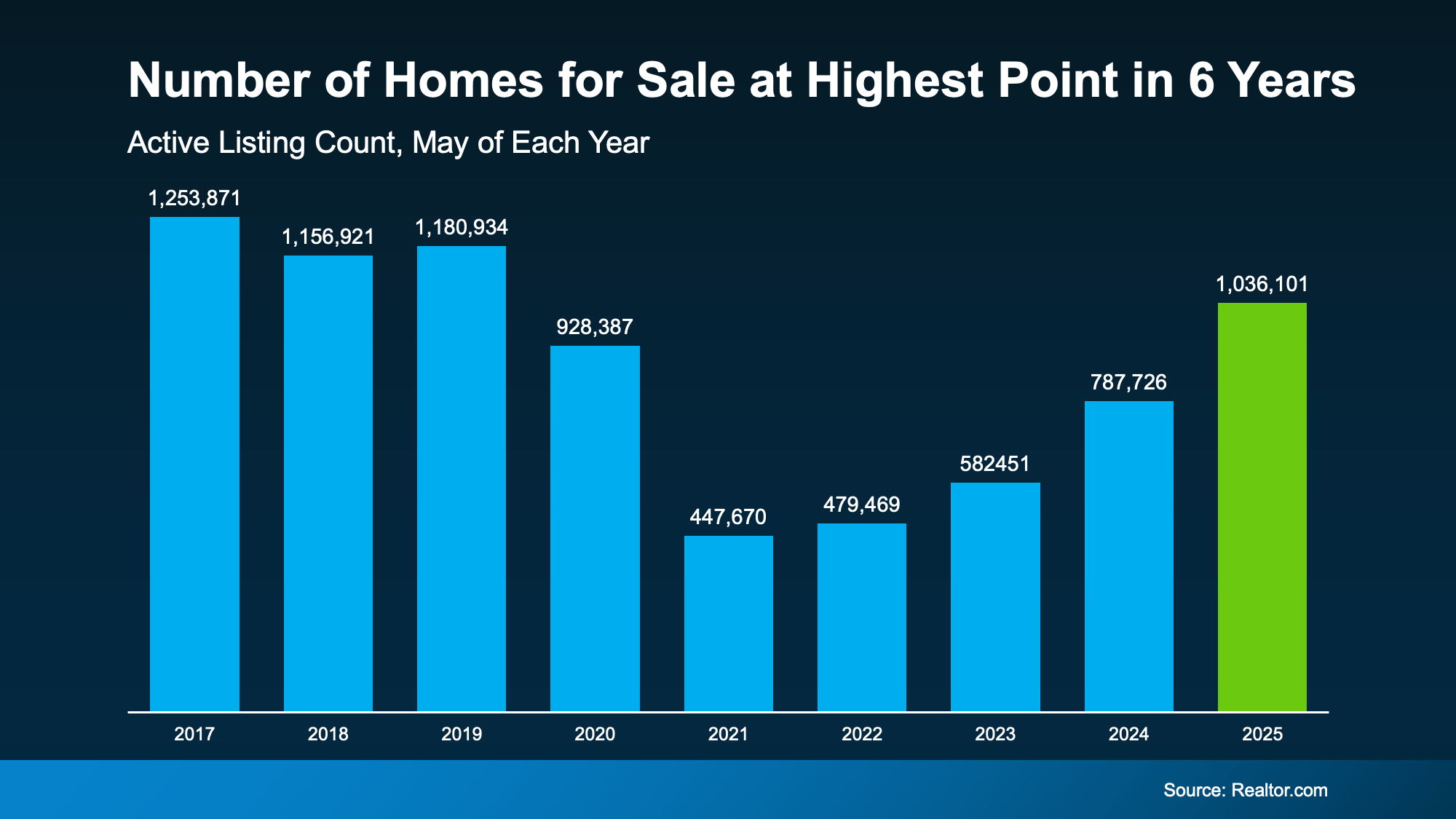
Now that the number of homes for sale has increased, homes aren’t selling at the same pace as they were. But you can still sell quickly if you have a proven plan to help your house stand out.

Just remember, homeowners don’t have the same network or marketing tools an experienced agent does. So, if you want the process to happen fast, you’ll likely want a pro by your side.

Bottom Line

Having the right agent and the right strategy is key in a shifting market. Let’s connect so you don’t have to take this on solo – and so you can list with confidence, knowing you’ve got expert guidance from day one.

Uncategorized June 13, 2025

You May Have Enough Equity To Downsize and Buy Your Next House in Cash

Uncategorized June 12, 2025

Your House Didn’t Sell. Here’s What To Do Now.

When your house doesn’t sell, it doesn’t just feel frustrating – it feels personal. You put time, money, and emotional energy into this move. You told your friends and family it was happening. And now that your listing has expired without a buyer? You’re left feeling stuck, and maybe even a little embarrassed.

And here’s what most agents won’t tell you. Over 70% of homeowners who re-list with a different agent sell their house.

Re-list with the same agent? That stat drops to only 50%, according to the latest data from REDX. That’s like leaving the fate of your sale to a coin toss. And that’s not good enough.

REDX data also shows that only 1 in 3 homeowners with expired listings make that change. That means most sellers either give up or repeat the same mistakes, resulting in the same disappointing outcome. You deserve better.

Same house. Different strategy. Completely different results. 

Let’s break down what might have gone wrong – and how a fresh perspective can help you develop a winning strategy this time.

1. It Was Priced Too High

Today, homebuyers are feeling the squeeze of higher mortgage rates, so even a slightly overpriced home will get overlooked. And once your listing starts to go stale, it becomes difficult to regain momentum.

Missing the mark on pricing is a costly mistake, and many homeowners are making it right now.

What we need to do now: We need to analyze the latest sales data in your area to ensure you’re meeting the target number. This includes taking a hard look at real-time buyer behavior and any feedback you received from open houses or showings during your first attempt. Pricing at, or even just below, the current market value is a winning play because it drives more buyers to your listing, which in turn amps up the competition for your home.

2. It Didn’t Show Well

You only get one shot at a first impression. If the listing photos didn’t top, the house wasn’t tagged well, or it hadn’t been dated, most buyers will skip over it without ever scheduling a showing. And even if buyers did show up, small things like scuffed walls, outdated light fixtures, or a wobbly doorknob can turn them away.

What we need to do now: Let’s walk through your house with fresh eyes to identify any areas that may have been sticking points, both inside and out. Sometimes, taking down old drapery, some light staging, or even a fresh coat of paint can completely change how a buyer feels about the home.

3. It Didn’t Get the Right Exposure

If your home didn’t sell, chances are it wasn’t getting the visibility it deserved. Generic flyers and a few online photos are no longer enough. Today’s top agents are using highly targeted digital marketing, social media strategies, custom video content, and more to get your listing in front of the right buyers at the right time.

What we need to do now: We must do more than list your house online and hope it sells. Together, we can develop a comprehensive plan to maximize its exposure. With the correct pricing, staging, and marketing, your house will sell quickly. Here’s a real-world example (see graph below):

4. You Weren’t Willing To Negotiate

In this market, sellers who aren’t open to negotiating on items such as closing costs, inspection repairs, or other concessions are often left behind. And if your last agent didn’t set that expectation with you, that’s a real shame.

What we need to do now: Be willing to meet buyers where they are. The goal is to finalize the deal, and sometimes that means getting creative to help buyers cross the finish line. Home values have increased by over 55% over the last five years, so you likely have enough wiggle room to offer some perks without sacrificing your bottom line.

Bottom Line

If your house didn’t sell and your listing has expired, you don’t need to give up. You need a better plan. And a better partner.

Over 70% of homeowners who switch agents end up selling their house after re-listing it. That’s not a coincidence. That’s strategy.

 If you’re ready for a proven approach, let’s talk so you know what to do differently – and why doing different things works. It’s time to get your move back on track.

Uncategorized June 11, 2025

Is Inventory Getting Back To Normal?

After years of it feeling almost impossible to find a home you want to buy, things are changing for the better.

Nationally, inventory is growing, and that gives you more options for your move. But here’s what you need to know. That level of growth is going to vary based on where you live. And that’s why you need an agent’s local market expertise.

Here’s a quick rundown of the current inventory situation, so you know what’s happening and what to expect.

Significant Growth Across the Nation

Nationally, the number of homes for sale is rising – and that’s true in all regions of the country. That’s shown in this data from Realtor.com. In each of the four regions, inventory is up at least 19% compared to the same time last year. In the West, it’s actually up almost 41% year-over-year (see graph below):

a graph with blue squaresThere are two main reasons for this increase:

  • More sellers are listing their homes. Many homeowners have been waiting for mortgage rates to drop before making a move. Now, some have decided they can’t wait any longer. May had more new listings than any May in the past three years.
  • Homes are taking longer to sell. That means listings are staying on the market longer, which increases the total number of homes available. In May, the typical home took 51 days to sell – much closer to what’s more typical for the market.

More homes for sale helps the market become more balanced. For the past few years, sellers have had the upper hand. Now, things are shifting. Nationally, it’s not a full-on buyer’s market yet, but it’s heading toward a healthier place, especially for homebuyers. Danielle Hale, Chief Economist at Realtor.com, explains:

“The number of homes for sale is rising in many markets, giving shoppers more choices than they’ve had in years . . . the market is starting to rebalance.

How Much Growth We’ve Seen Varies by Area

But, how long it’s going to take to achieve true balance is going to vary by area. Some parts of the country are seeing inventory bounce all the way back to normal levels, while others haven’t grown quite that much yet.

Let’s take a look at another graph. This time, we’ll compare the current data (what you already saw) to the last normal years in the housing market (2017-2019).

In this comparison, the green shows which regions are back at more typical levels for inventory based on the growth we’ve seen lately. The red shows where things have improved, but are still well below the norm (see graph below):

a graph of a graph with blue and orange squaresHere’s what that means for you. Across the board, you have more options now than you would’ve just one year ago. And that’s a really good thing. More choices means it should be a bit easier to find a home you love.

But not all markets are the same – some will take a bit longer to get back to more typical levels. So, lean on a local agent to find out what the inventory situation looks like where you want to live. They’ll be able to tell you how much growth they’ve seen locally and how to tailor your home search based on what’s available in that area. This is just one of the reasons a local agent’s perspective matters.

Bottom Line

Inventory is getting better, but how long it takes to get back to normal is going to be different based on where you’re looking to buy. Let’s talk about what’s happening in our local market and how it affects your next move.

What’s one thing you’ve noticed lately that makes the market feel different than it did a year or two ago?

Uncategorized June 10, 2025

The Five-Year Rule for Home Price Perspective

Headlines are saying home prices are starting to dip in some markets. And if you’re beginning to second-guess your plans based on what you’re hearing in the media, here’s what you need to know.

A few metros are indeed seeing slight price drops. But don’t let that overshadow this simple truth. Home values almost always go up over time (see graph below):

a graph of a graph of salesWhile everyone remembers what happened around the housing crash of 2008, that was the exception, not the rule. It hadn’t happened before, and hasn’t since. Many market dynamics were drastically different back then as well. From relaxed lending standards to a lack of homeowner equity, and even a significant oversupply of homes, it was very different from where the national housing market is today. So, every headline about prices slowing down, normalizing, or even dipping doesn’t need to trigger fear that another major crash is on the horizon.

Here’s something that explains why short-term dips usually aren’t a long-term deal-breaker.

What’s the Five-Year Rule?

In real estate, you may hear references to the five-year rule. The idea is that if you plan to own your home for at least five years, short-term price dips usually don’t hurt you much. That’s because home values almost always go up in the long run. Even if prices drop a bit for a year or two, they tend to bounce back (and then some) over time.

Take it from Lance Lambert, Co-Founder of ResiClub:

“. . . there’s the ‘five-year rule of thumb’ in real estate—which suggests that most buyers can buffer themselves from mild short-term declines if they plan to own a property for at least that amount of time.”

What’s Happening in Today’s Market?

Here’s something else to put your mind at ease. Currently, most housing markets are still experiencing rising home prices, albeit at a slower pace than they were a few years ago.

However, in the major metros where prices are starting to cool slightly (as indicated by the red bars in the graph below), the average drop since April 2024 is only about 2.9%. That’s not a significant decline, like the one we saw back in 2008.

When you examine the graph below, it’s clear that prices in most of those markets have increased significantly compared to five years ago (the blue bars). So, those homeowners are still ahead if they’ve been in their house for a few years or more (see graph below):

The Big Picture

Over the past 5 years, home prices have risen a staggering 55%, according to the Federal Housing Finance Agency (FHFA). So, a slight short-term dip isn’t a significant loss. Even if your city is one where they’re down 2% or so, you’re still up far more than that.

And if you break those 5-year gains down even further, using data from the FHFA, you’ll see home values are up in every single state over the last five years (see map below):

a map of the united statesThat’s why it’s important not to stress too much about what’s happening this month, or even this year. If you’re in it for the long haul (and most homeowners are, your home is likely to appreciate over time.

Bottom Line

Yes, prices can shift in the short term. However, history shows that home values almost always appreciate, especially if you live in the home for at least five years. So, whether you’re considering buying or selling, remember the five-year rule and take comfort in the long view.

When you think about where you want to be in five years, how does owning a home fit into that picture?

Let’s connect to get you there.

Uncategorized June 10, 2025

The Five-Year Rule for Home Price Perspective

Headlines are saying home prices are starting to dip in some markets. And if you’re beginning to second-guess your plans based on what you’re hearing in the media, here’s what you need to know.

A few metros are indeed seeing slight price drops. But don’t let that overshadow this simple truth. Home values almost always go up over time (see graph below):

a graph of a graph of salesWhile everyone remembers what happened around the housing crash of 2008, that was the exception, not the rule. It hadn’t happened before, and hasn’t since. Many market dynamics were drastically different back then as well. From relaxed lending standards to a lack of homeowner equity, and even a significant oversupply of homes, it was very different from where the national housing market is today. So, every headline about prices slowing down, normalizing, or even dipping doesn’t need to trigger fear that another major crash is on the horizon.

Here’s something that explains why short-term dips usually aren’t a long-term deal-breaker.

What’s the Five-Year Rule?

In real estate, you may hear references to the five-year rule. The idea is that if you plan to own your home for at least five years, short-term price dips usually don’t hurt you much. That’s because home values almost always go up in the long run. Even if prices drop a bit for a year or two, they tend to bounce back (and then some) over time.

Take it from Lance Lambert, Co-Founder of ResiClub:

“. . . there’s the ‘five-year rule of thumb’ in real estate—which suggests that most buyers can buffer themselves from mild short-term declines if they plan to own a property for at least that amount of time.”

What’s Happening in Today’s Market?

Here’s something else to put your mind at ease. Currently, most housing markets are still experiencing rising home prices, albeit at a slower pace than they were a few years ago.

However, in the major metros where prices are starting to cool slightly (as indicated by the red bars in the graph below), the average drop since April 2024 is only about 2.9%. That’s not a significant decline, like the one we saw back in 2008.

When you examine the graph below, it’s clear that prices in most of those markets have increased significantly compared to five years ago (the blue bars). So, those homeowners are still ahead if they’ve been in their house for a few years or more (see graph below):

The Big Picture

Over the past 5 years, home prices have risen a staggering 55%, according to the Federal Housing Finance Agency (FHFA). So, a slight short-term dip isn’t a significant loss. Even if your city is one where they’re down 2% or so, you’re still up far more than that.

And if you break those 5-year gains down even further, using data from the FHFA, you’ll see home values are up in every single state over the last five years (see map below):

a map of the united statesThat’s why it’s important not to stress too much about what’s happening this month, or even this year. If you’re in it for the long haul (and most homeowners are), your home is likely to grow in value over time.

Bottom Line

Yes, prices can shift in the short term. However, history shows that home values almost always go up, especially if you live there for at least five years. So, whether you’re considering buying or selling, remember the five-year rule and take comfort in the long view.

When you think about where you want to be in five years, how does owning a home fit into that picture?

Let’s connect to get you there.

Uncategorized June 9, 2025

Buying Your First Home? FHA Loans Can Help

If you’re a first-time homebuyer, you might feel like the odds are stacked against you in today’s market. However, there are resources and programs available that can help – if you know where to look. And one thing that can make homeownership easier to achieve? An FHA home loan.

They’re designed to help you overcome some of the biggest financial hurdles in the homebuying process – and that’s why so many first-timers are using them to make their purchase.

Whether you’re dreaming of ditching rent, planting roots, or just wanting a place that’s truly yours, an FHA home loan could be the path that gets you there sooner than you think.

Buying Your First Home Probably Doesn’t Feel Easy Right Now

While the motivation to buy a home remains strong for many people, affordability is a significant challenge today. According to a survey from 1000WATT, potential first-time buyers say their top two concerns are saving enough for their down payment and making the monthly mortgage payments work at today’s home prices and mortgage rates (see graph below):

That’s Where FHA Loans Come In

FHA loans help many first-time buyers overcome these challenges.

In fact, according to Intercontinental Exchange (ICE), the average first-time buyer using an FHA loan puts down just $16,000. That’s a big difference from the $77,000 they’re putting down with the typical conventional mortgage (see graph below):

Essentially, buyers who use an FHA loan may not need to come up with as much cash upfront. But the perks don’t stop there. You may also be able to pay less monthly, too.

That’s because, a lot of the time, the mortgage rate on FHA loans can be lower. Bankrate says:

“FHA loan rates are competitive with, and often slightly lower than, rates for conventional loans.”

So, if you’re thinking about buying your first place, an FHA loan may be worth exploring.

Because of the potential for lower down payment requirements and maybe even a lower mortgage rate, it could help with the two most common hurdles first-time buyers face today – saving enough money upfront and affording the monthly payment.

A trusted lender can guide you through the details, compare your options, and help you determine which loan type is most suitable for your situation.

Bottom Line

With the right loan and the proper guidance, homeownership may be more achievable than you think.

Would you like to discuss your options further? A trusted lender is there to help.

Uncategorized June 6, 2025

The Big Difference Between Homeowner and Renter Net Worth

Uncategorized June 5, 2025

The Rooms That Matter Most When You Sell

Now that buyers have more options for their move, you need to be more intentional about ensuring your house looks its best when you sell. Proper staging can be a great way to achieve just that.

What Is Home Staging?

It’s not making your house look super trendy or like it belongs in a magazine. It’s helping it feel welcoming and move-in ready, so it’s easier for buyers to picture themselves living there.

It’s essential to understand that there’s a specific time frame for staging. It can include everything from simple tweaks to more extensive setups, depending on your needs and budget. But a little bit of time, effort, and money invested in this process can make a difference when you sell, especially in today’s

A study from the National Association of Realtors (NAR) shows staged homes sell faster and for more money than homes that aren’t staged at all (see below):

Which Rooms Matter Most?

The best part is, odds are you don’t have to stage your whole house to make an impact. According to NAR, here’s where buyers say staging can make the most significant difference (see graph below):

a graph of a number of peopleAs you can see, agents who regularly interact with buyers agree that the most important spaces to stage are the rooms where buyers will spend the most time, such as the living room, primary bedroom, and kitchen.

While this can give you a good general idea of what may be worth it and what’s not, it can’t replace the expertise of a local agent.

How an Agent Helps You Decide What You Need To Do

Agents are experts on what buyers are looking for in your area because they receive that feedback frequently during showings, home tours, walkthroughs, and from other agents. And they’ll see insights to give their opinion on your specific house and what areas may need a little bit of staging help, like if you need to:

  • Declutter and depersonalize by removing photos and personal items
  • Arrange your furniture to improve the room’s feel and make it feel bigger
  • Add plants, move art, or rearrange other accessories

Many buyers can use the agent’s staging advice as their sole guidance. However, if your home requires more significant transformation, or it’s empty and could benefit from rented furniture, a great agent will be able to determine if bringing in a professional stager might be a good idea as well. Please note that a higher level of help comes with a higher price tag. NAR reports:

“The median dollar value spent when using a staging service was $1,500, compared to $500 when the sellers’ agent personally staged the home.”

A local agent will help you weigh the costs and benefits based on your budget, your timeline, and the overall condition of your house. They’ll consider how quickly similar homes are selling nearby and what buyers are expecting at your price point.

Bottom Line

Staging doesn’t have to be over-the-top or expensive. It just needs to help buyers feel at home. A great agent will help you determine the level of staging that best aligns with your goals.

Which room in your house do you think would make the biggest impression on a buyer?

Let’s walk through your home together and chat about what will make your house stand out.

Uncategorized June 4, 2025

Understanding Today’s Mortgage Rates: Is 3% Coming Back?

Many buyers are holding off on their plans these days, hoping that mortgage rates will drop, perhaps even back to the historic low of 3% from a few years ago. But here’s the thing: those rates were never meant to last. They were a short-term response to a particular moment in time. And as the market finds its footing again, it’s time to reset expectations.

In 2020 and 2021, 3% mortgage rates provided buyers with a significant boost, offering more affordability, increased buying power, and greater opportunities. But those rates were a result of emergency economic policies during the height of a global pandemic. Now that the economy is in a different place, we’re seeing mortgage rates in the high 6% to low 7% range.

And while experts currently project a slight easing in the months ahead, most industry leaders agree: rates are not going back to 3%.

Instead, many forecasts suggest mortgage rates will settle in the mid-6% range by the end of the year, pending any major economic shifts. As Kara Ng, Senior Economist at Zillow, says:

“While Zillow expects mortgage rates to end the year near mid-6%, barring any unforeseen shocks, that path might be bumpy.”

What Buyers Should Know

Essentially, waiting for 3% rates may mean waiting longer than you expect, and missing out along the way. Instead of putting off homebuying indefinitely, make a plan to get there and focus on what you can control: your budget, your credit, and working with a trusted professional who can explain exactly what’s happening in the current market – and how to navigate it.

Your local real estate agent and a trusted lender make all the difference in this process. The experts have insights into down payment assistance programs, alternative financing options, and negotiation strategies, as well as the experience you need on your side to understand creative ways that will make your plans work.

And here’s the biggest thing to keep in mind. Since rates are projected to ease slightly later this year, if that happens, it could bring some more buyers back into the market. Acting now gives you a head start, especially with more homes on the market than we’ve seen in years.

Think about it: if mortgage rates do come down, what do you think everyone else is going to do? That’s right – they’ll jump back in too.

Getting ahead of that rush could put you in a stronger position to find the right home with less competition. Realtor.com sums it up nicely:

“Staying out of the market in hopes of a rate drop that never comes can lead to missed opportunities . . . Rising home prices, rent increases, and inflation might outpace any future savings on interest. And if rates do fall sharply again, buyers could face an entirely different challenge: surging competition.”

Bottom Line

Those 3% rates everyone remembers from a few years ago were the exception, not the rule.

Now that they’re settling into new territory, it’s a good time to adjust your expectations and learn more about where things are heading as this market shifts.

A local real estate agent and a trusted lender will be your best resources, always keeping you up-to-date and informed, so you can make informed decisions and build a plan that works for you.