Uncategorized July 31, 2025

The 3 Things You Risk by Pricing Too High

When selling your house, the price you choose isn’t just a number, it’s a strategy. And in today’s market, that strategy needs to be sharp.

The number of homes for sale is climbing. And that means buyers have more choices and can be more selective. If your price doesn’t line up with what else is out there, they’ll scroll right past it and go on to the next one.

Pricing right from the start is your best move – and a great agent can help make sure you do.

Overpricing Comes at a Cost

And more sellers are finding that out the hard way. They list their house based on how things were a year ago – or based on a neighbor’s sale that happened under completely different circumstances. Then, when their house doesn’t sell, they’re left with three tough choices:

  1. Drop the price: Cutting the price might help get more eyes on the house again, but it can also trigger red flags. Buyers may wonder what’s wrong with it. And that’s going to impact any offers you get after the price cut.
  2. Take it off the market: Some sellers give up on the idea of selling right now. The worst part about this is it means putting their future plans on the back burner. That dream of more space, downsizing, or relocating? On pause.
  3. Rent it out: Others go the landlord route, but managing tenants and navigating leases isn’t always the simple fallback it seems. Renting can work, but it’s often a lot more hassle than people expect.

None of those options were part of the original plan. And honestly, none of them are where you should end up if you wanted to sell. Here’s a look at how a local agent’s expertise can help you avoid these headaches. Let’s use price cuts as an example.

Where You Live Makes a Difference

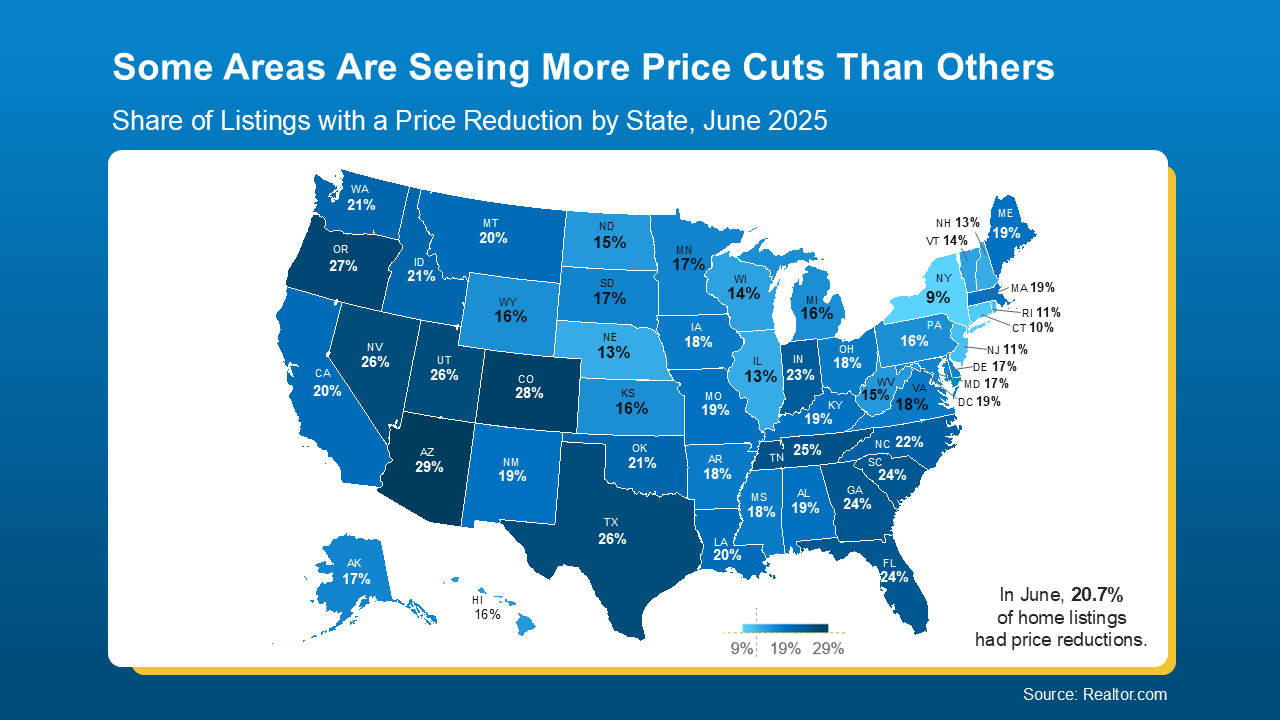
While the number of price cuts is up nationally, data shows some parts of the country are seeing far more of them than others. It all comes down to how much inventory has grown in that area (see map below):
a map of the united states with blue squaresAs Realtor.com explains:

“Regionally, price reductions in June were significantly more common in the South and West (23% of listings) than they were in the Northeast (13% of listings), reflecting the inventory divergence across these regions.”

That means pricing isn’t one-size-fits-all. What’s happening nationally might not reflect what’s happening in your zip code, and that’s why you shouldn’t try to determine your list price on your own.

How a Great Agent Helps You Nail the Price

A skilled agent doesn’t just toss out a number. As Zillow says:

Well-priced homes are more likely to sell quickly, but pricing your home to sell quickly and for maximum dollar requires strategy and knowledge of your local market. You need to have a clear-eyed view of your home in relation to the competition, and knowledge about whether you’re in a buyers or sellers market. It also helps to know what buyers in your area can afford.” 

And that’s all knowledge your agent will have. They study your local market, compare recent sales, and factor in your goals and buyer behavior. Based on what’s happening where you live, sometimes the best play will be pricing right at current market value. Other times pricing a little lower actually will spark more offers and ultimately get you a better final sale price.

So don’t skimp on the strategy or on your agent. With their local market know-how, you’ll be able to sell quickly, even in a shifting market.

Bottom Line

Overpricing can lead to tough choices you never want to face. But with the right price, and the proper guidance, you can skip the stress and sell with confidence. Let’s connect so you have a pricing strategy that works for today’s market and gets you where you want to go.

Uncategorized July 31, 2025

What Credit Score Do You Really Need To Buy a Home?

According to Fannie Mae, 90% of buyers are either unaware of the credit score lenders require or overestimate the minimum needed.

Let that sink in. That means most homebuyers think they need better credit than they do – and maybe you’re one of them. And that could make you think buying a home is out of reach for you right now, even if that’s not necessarily true. So, let’s look at what the data says about credit scores and homebuying.

There’s No One Magic Number

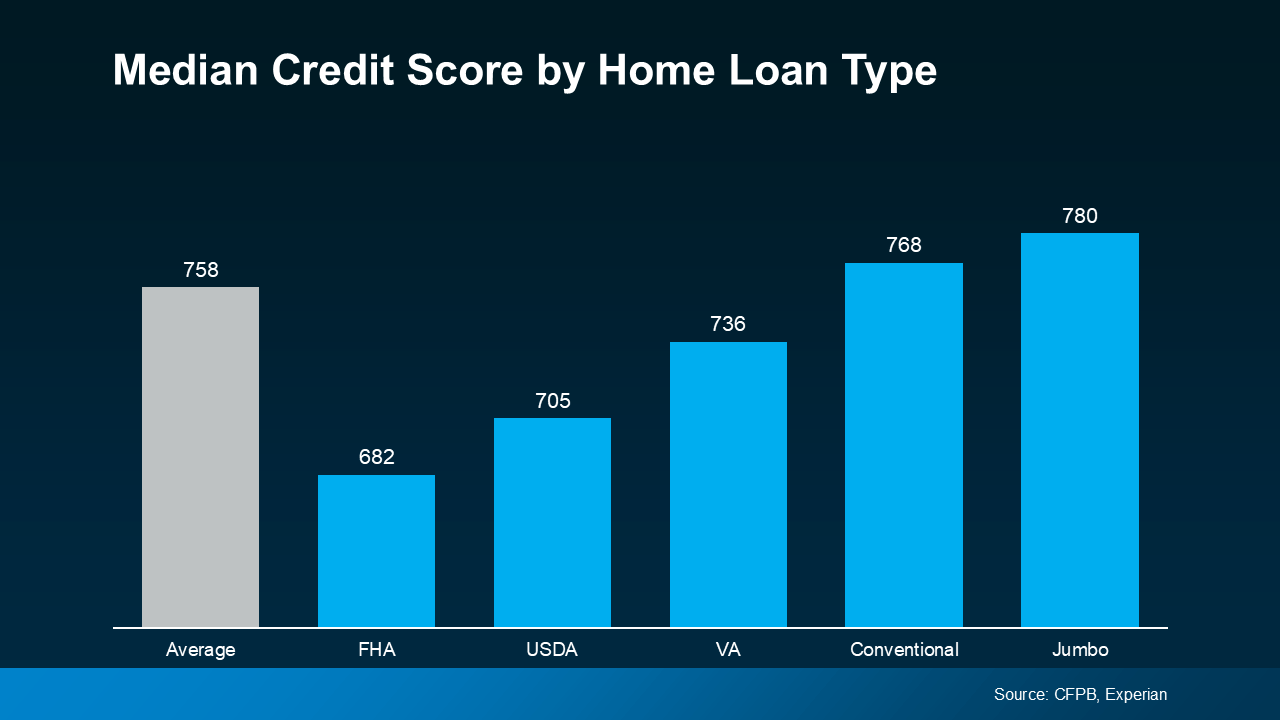
There’s no universal credit score required when buying a home. And that means there’s more flexibility than most people realize. Check out this graph showing the median credit scores recent buyers had among different home loan types:

a graph of a credit scoreHere’s what’s important to know. The numbers vary, and there’s no one-size-fits-all threshold. And that could open doors you thought were closed for you. The best way to learn more is to talk to a trusted lender. As FICO explains:

“While many lenders use credit scores like FICO Scores to help them make lending decisions, each lender has its own strategy, including the level of risk it finds acceptable. There is no single ‘cutoff score’ used by all lenders, and there are many additional factors that lenders may use . . .”

Why Your Score Still Matters

When you buy a home, lenders use your credit score to assess your financial reliability. They want to see if you typically make payments on time, pay back debts, and more.

Your score can impact which loan types you may qualify for, the terms on those loans, and even your mortgage rate. And since mortgage rates are a significant factor in how much house you’ll be able to afford, that may make your score feel even more important today. As Bankrate says:

“Your credit score is one of the most important factors lenders consider when you apply for a mortgage. Not just to qualify for the loan itself, but for the conditions: Typically, the higher your score, the lower the interest rates and better terms you’ll qualify for.”

That still doesn’t mean your credit has to be perfect. Even if your credit score isn’t as high as you’d like, you may still be able to get a home loan.

Want To Boost Your Score? Start Here

And if you talk to a lender and decide you want to improve your score (and hopefully your loan type and terms too), here are a few smart moves according to the Federal Reserve Board:

  • Pay Your Bills on Time: This is a big one. Lenders want to see that you can reliably pay your bills on time. This includes everything from credit cards to utilities and cell phone bills. Consistent, on-time payments show you’re a responsible borrower.
  • Pay Down Your Debt: The less you use your available credit, the better. Focus on keeping this number as low as possible. That makes you a lower-risk borrower in the eyes of lenders – making them more likely to approve a loan with better terms.
  • Review Your Credit Report: Get copies of your credit report and work to correct any errors you find. This can help improve your score.
  • Don’t Open New Accounts: While it might be tempting to open more credit cards to build your score, it’s best to hold off. Too many new credit applications can lead to complex inquiries on your report, which can temporarily lower your score.

Bottom Line

Your credit score doesn’t have to be perfect to qualify for a home loan. But a better score can help you get better terms on your home loan. The best way to know where you stand and your options for a mortgage is to connect with a trusted lender.​

Uncategorized July 29, 2025

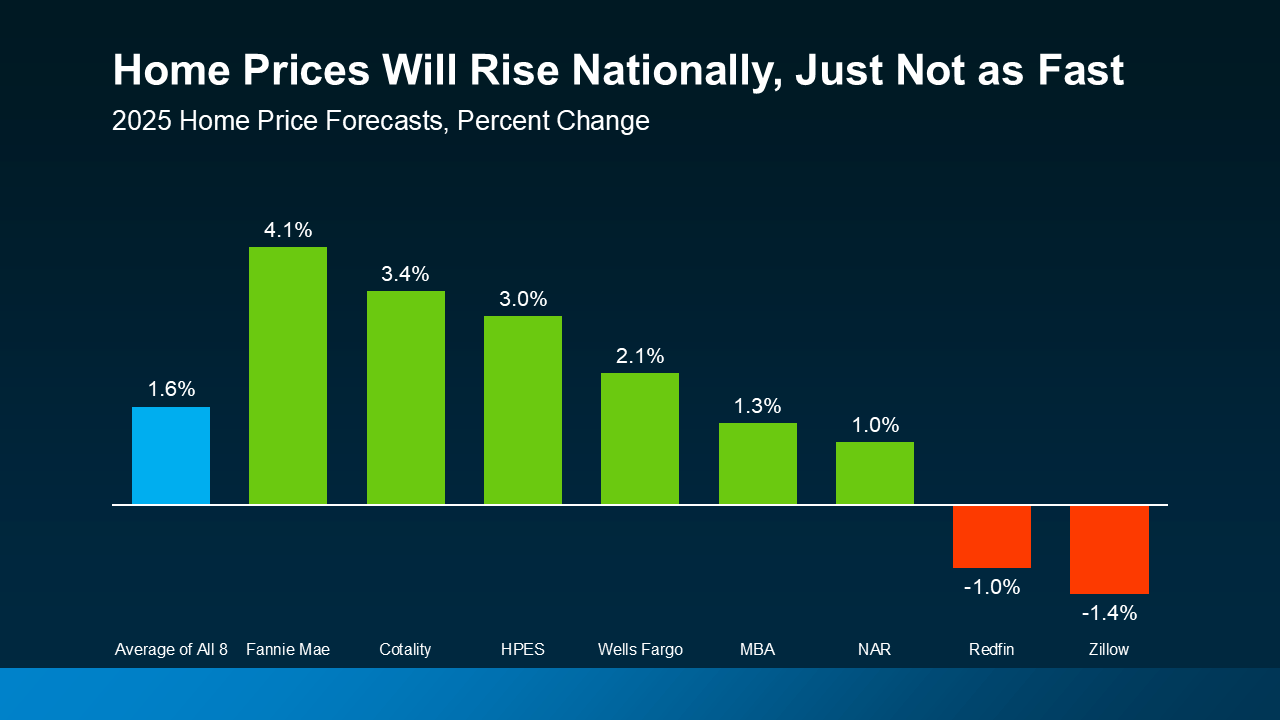
Home Price Forecasts for the Second Half of 2025

Uncategorized July 28, 2025

Housing Market Forecasts for the Rest of 2025

If you’ve been watching the market, you’ve likely noticed a few changes already this year. But what’s next? From home prices to mortgage rates, here’s what the latest expert forecasts suggest for the rest of 2025 – and what these shifts could mean for you.

Will Home Prices Fall?

Many buyers are hoping home prices will come down soon. Recent headlines about prices dipping in some areas are leading some people to believe it’s just a matter of time before there’s a bigger drop. But here are the facts.

While home price growth is slowing down, that doesn’t mean we’re headed for a crash. As NAHB explains:

“House price growth slowed . . . partly due to a decline in demand and an increase in supply. Persistent high mortgage rates and increased inventory combined to ease upward pressure on house prices. These factors signaled a cooling market, following rapid gains seen in previous years.”

However, experts say that even with this slowdown, prices will still rise at the national level this year. The average of 8 leading forecasters shows prices are expected to go up 1.5-2% in 2025 (see graph below):

That means, if you’re waiting for a significant drop, experts agree that’s not in the cards.
Keep in mind that while some markets are already seeing prices come down slightly, the average dip is only -3.5%. That’s a far cry from the nearly 20% decline the market experienced during the 2008 crash.

Plus, those small changes are easily absorbed when you consider how much home prices have climbed over the past few years. Data from the Federal Housing Finance Agency (FHFA) shows prices are up 55% nationally compared to just 5 years ago.

The takeaway? Prices aren’t crashing. They’re expected to keep climbing – just not as quickly these days. And some may argue they’ll be closer to flat by the end of this year. However, this is likely to vary by market, with some local fluctuations. So, lean on a pro to see the latest price trends for your area.

Will Mortgage Rates Come Down?

Another common thought among today’s buyers is, ‘I’m just going to wait for rates to come down.’ But is that a smart strategy? According to Yahoo Finance:

“If you’re looking for a substantial interest rate drop in 2025, you’ll likely be left waiting. The latest news from the Federal Reserve and other key economic data point toward steady mortgage rates on par with what we see today.”

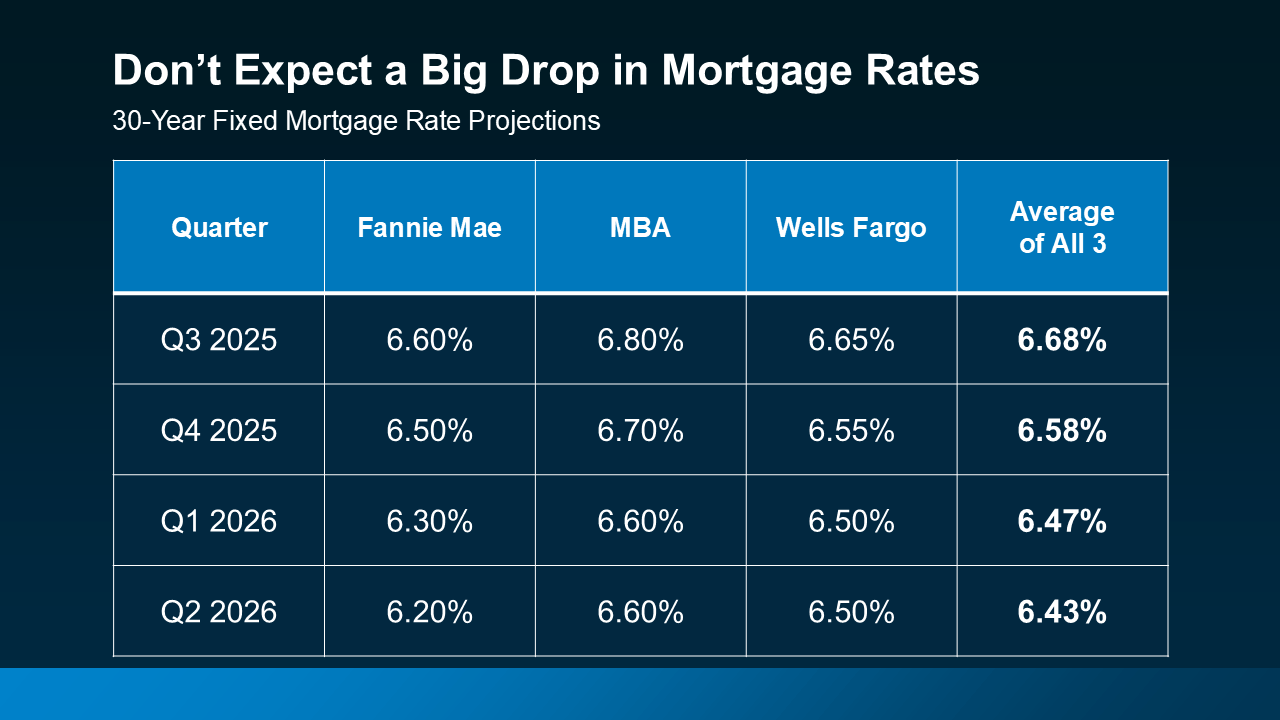
In other words, avoid trying to time the market or waiting for a drop that may not materialize. Most experts say rates will remain in the 6s, and current projections have them settling in the mid-6% range by the end of this year (see chart below):

a blue rectangular table with white textAnd that’s not a significant change from where they are right now. So, if you need to move, let’s discuss how to make it happen and what to watch out for. Because, while rates may not be as low as you want them to be, you don’t want to put your needs on the back burner, hoping for something the data shows is unlikely to happen.

Working with an expert who is closely monitoring all the economic factors that can influence mortgage rates is going to be essential this year. That’s because changes in factors such as inflation and other key drivers could impact how rates move going forward.

The Takeaway for Buyers and Sellers

Whether you’re buying, selling, or considering both, this market requires a strategy, not guesswork. Prices are still rising nationally (just more slowly), and rates are projected to stay pretty much where they are, so the bigger picture is one of moderation – not a meltdown.

Bottom Line

If you want to make a move, your best bet is to focus on your situation – not what the headlines say – and work with a real estate pro who knows how to navigate the shifting conditions in our local market.


Let’s discuss what’s happening in our area to create a plan that works for you.

Uncategorized July 24, 2025

Housing Market Forecasts for the Rest of 2025

If you’ve been watching the market, you’ve likely noticed a few changes already this year. But what’s next? From home prices to mortgage rates, here’s what the latest expert forecasts suggest for the rest of 2025 – and what these shifts could mean for you.

Will Home Prices Fall?

Many buyers are hoping home prices will come down soon. Recent headlines about prices dipping in some areas are leading some people to believe it’s just a matter of time before there’s a bigger drop. But here are the facts.

While home price growth is slowing down, that doesn’t mean we’re headed for a crash. As NAHB explains:

“House price growth slowed . . . partly due to a decline in demand and an increase in supply. Persistent high mortgage rates and increased inventory combined to ease upward pressure on house prices. These factors signaled a cooling market, following rapid gains seen in previous years.”

However, experts say that even with this slowdown, prices will still rise at the national level this year. The average of 8 leading forecasters shows prices are expected to go up 1.5-2% in 2025 (see graph below):

That means, if you’re waiting for a significant drop, experts agree that’s not in the cards.

Keep in mind that while some markets are already seeing prices come down slightly, the average dip is only -3.5%. That’s a far cry from the nearly 20% decline the market experienced during the 2008 crash.

Plus, those small changes are easily absorbed when you consider how much home prices have climbed over the past few years. Data from the Federal Housing Finance Agency (FHFA) shows prices are up 55% nationally compared to just 5 years ago.

The takeaway? Prices aren’t crashing. They’re expected to keep climbing – just not as quickly these days. And some may argue they’ll be closer to flat by the end of this year. However, this is likely to vary by market, with some local fluctuations. So, lean on a pro to see the latest price trends for your area.

Will Mortgage Rates Come Down?

Another common thought among today’s buyers is, ‘I’m just going to wait for rates to come down.’ But is that a smart strategy? According to Yahoo Finance:

“If you’re looking for a substantial interest rate drop in 2025, you’ll likely be left waiting. The latest news from the Federal Reserve and other key economic data point toward steady mortgage rates on par with what we see today.”

In other words, avoid trying to time the market or waiting for a drop that may not materialize. Most experts say rates will remain in the 6s, and current projections have them settling in the mid-6% range by the end of this year (see chart below):

a blue rectangular table with white textAnd that’s not a significant change from where they are right now. So, if you need to move, let’s discuss how to make it happen and what to watch out for. Because, while rates may not be as low as you want them to be, you don’t want to put your needs on the back burner, hoping for something the data shows is unlikely to happen.

Working with an expert who is closely monitoring all the economic factors that can influence mortgage rates is going to be essential this year. That’s because changes in factors such as inflation and other key drivers could impact how rates move going forward.

The Takeaway for Buyers and Sellers

Whether you’re buying, selling, or considering both, this market requires a strategy, not guesswork. Prices are still rising nationally (just more slowly), and rates are projected to stay pretty much where they are, so the bigger picture is one of moderation – not a meltdown.

Bottom Line

If you want to make a move, your best bet is to focus on your situation – not what the headlines say – and work with a real estate pro who knows how to navigate the shifting conditions in our local market.


Let’s discuss what’s happening in our area to create a plan that works for you.

Uncategorized July 22, 2025

The Latest Mortgage Rate Forecasts

Uncategorized July 21, 2025

Don’t Make These Mistakes When Selling Your House

Are you thinking about selling your house? Some common mistakes can make the process more stressful or even result in financial loss.

Fortunately, they’re easy to avoid, as long as you know what to watch for. Let’s break down the biggest seller slip-ups and how an agent helps you steer clear of them.

1. Overpricing Your House

It’s completely natural to want top dollar for your house, especially if you’ve put a lot of work into it. But in today’s shifting market, pricing it too high can backfire. Investopedia explains:

“Setting a list price too high could mean your home struggles to attract buyers and stays on the market for longer.

And your house sitting on the market for a long time could lead to price cuts that raise red flags. That’s why pricing your home right from the start matters.

A great real estate agent will look at what other homes nearby have sold for, the condition of your house, and what’s happening in your market right now. That helps them find a price that’s more likely to battractbuyers, and mpossiblyeven mmultiple offers

2. Spending Money on the Wrong Upgrades

The housing market has nearly half a million more sellers than buyers, according to Redfin. That means you have more competition as a seller and may need to do a bit more to prepare your house for sale. However, not all projects will be worth it. If you spend Money on the wrong projects, it could cut into your profit.

A local real estate pro knows what buyers in your area are looking for, and they can help you figure out which projects are worth it and which ones to skip. Even better, they’ll know how to highlight any upgrades you make in your listing, so your house stands out online and gets more attention.

3. Refusing To Negotiate

Now that inventory has grown, it’s essential to stay flexible. Buyers have more options, and with it comes more negotiating power. U.S. News explains:

“If you’ve received an offer for your house that isn’t quite what you’d hoped it would be, expect to negotiate . . . make sure the buyer also feels like he or she benefits . . . consider offering to cover some of the buyer’s closing costs or agree to a credit for a minor repair the inspector found.”

That’s where your agent comes in. They’ll help you understand what buyers are looking for, what’s typical in today’s market, and how to find a mutually beneficial solution. Sometimes, making a small compromise can keep the deal moving and help you move on to your next chapter faster.

4. Skipping Research When Hiring an Agent

All of these mistakes are avoidable with the help of a skilled agent. So, you want to be sure you’re working with the right partner. Still, according to the National Association of Realtors (NAR), 81% of sellers choose the first agent they speak with.

Many homeowners may skip essential steps, such as reading reviews, checking the sales history, and interviewing a few agents. But that’s a mistake. You want someone you know you can rely on – someone with a good track record. The right agent can help you price your house correctly, market it effectively, and sell it quickly (and possibly for more Money).

Bottom Line

Selling a house doesn’t have to be stressful, especially if you have an experienced agent by your side. Let’s connect so you have an expert to help you avoid these common mistakes and make the most of your sale.

What’s one thing you’d want expert advice on before putting your house on the market?

Uncategorized July 17, 2025

Why a Newly Built Home Might Be the Move Right Now

Are you looking for better home prices, or even a lower mortgage rate? You might find both in one place: a newly built home. While many buyers are overlooking new construction, it could be your best opportunity in today’s market. Here’s why.

There are more brand-new homes available right now than there were even just a few months ago. According to the most recent data from the Census and the National Association of Realtors (NAR), approximately 1 in 5 homes for sale currently are new construction. So, if you’re not looking at newly built homes, you’re missing out on a significant portion of what’s available.

With more new homes on the market, builders are motivated to sell their existing inventory. As a result, many are taking steps to draw in buyers.

Builders Are Cutting Prices

According to Buddy Hughes, Chairman of the National Association of Home Builders (NAHB):

“Almost 40% of home builders reduced sales prices in the last month . . .”

That means builders are being realistic about today’s market and adjusting to what buyers can afford. It’s their way to keep their inventory moving.

So, builders may be more willing to negotiate price than you’d expect – and that means your dollar may go further if you buy a newly built home. Lean on your agent to see what’s available and what incentives builders are offering in and around your area.

Builders Are Offering Lower Mortgage Rates

Here’s something most people don’t know. Currently, buyers of brand-new homes often secure better mortgage rates than those purchasing existing homes.

That’s because many builders are also offering rate buydowns to make their homes more attractive and keep sales moving. They’re willing to chip in to lower your rate, so you’re more likely to buy one of their homes.

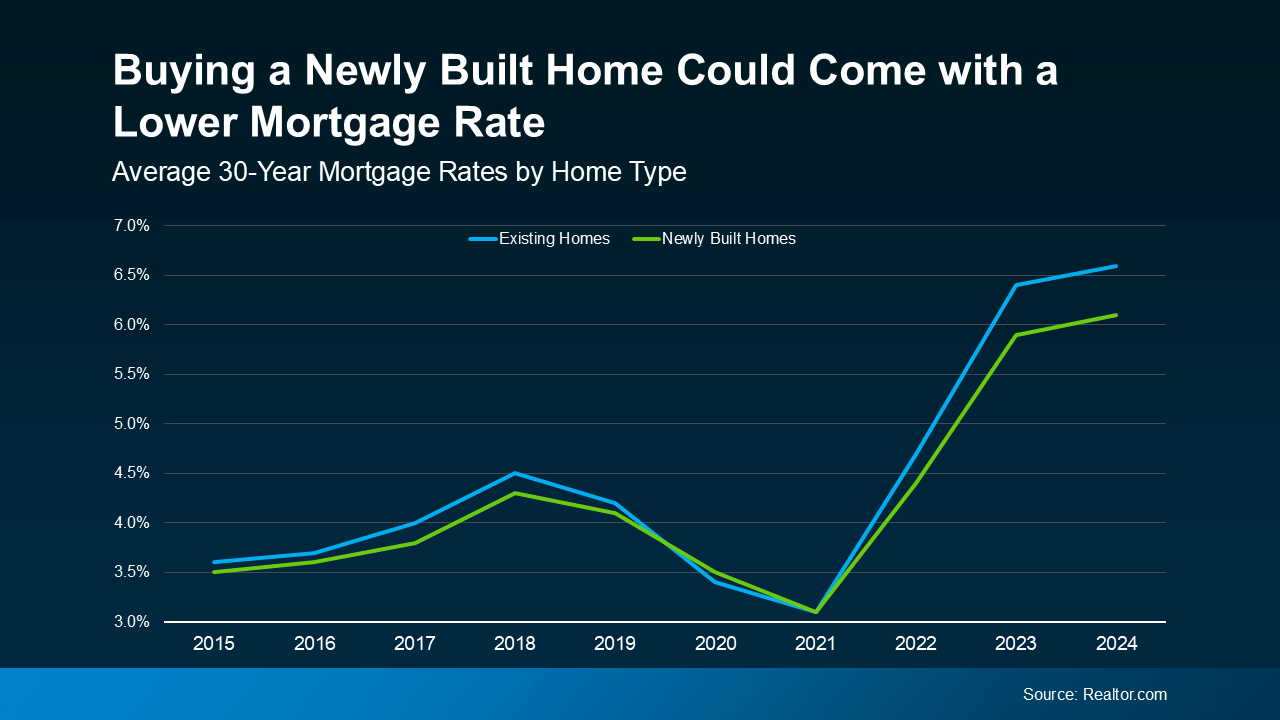
Data from Realtor.com shows that, in 2023 and 2024, buyers of newly built homes got a mortgage rate around half a percent lower compared to those who bought existing homes (see graph below):

a graph of a graph showing a line graphThat kind of savings adds up and makes a significant difference when you’re determining your monthly budget.

So, if you haven’t found something you love yet, it’s time to add newly built homes to your search. You may find that what you’ve been looking for is already out there; it’s just in a new home community.

Bottom Line

With more choices, the potential to negotiate on price, and possibly even better mortgage rates, these options are a bright spot in today’s housing market.

If you haven’t considered a newly built home yet, what’s holding you back?

Let’s talk about it and see if it’s worth checking out new builds in and around our area.

Uncategorized July 16, 2025

Mortgage Rates Are Stabilizing – How That Helps Today’s Buyers

Over the past few years, affordability has been the biggest challenge for homebuyers. Between rapidly rising home prices and higher mortgage rates, many have felt stuck between a rock and a hard place.

But, something pretty encouraging is happening. Although affordability remains tight, mortgage rates have shown signs of stabilizing in recent months. And that may finally make it a bit easier to plan your move.

Mortgage Rates Have Stabilized – For Now

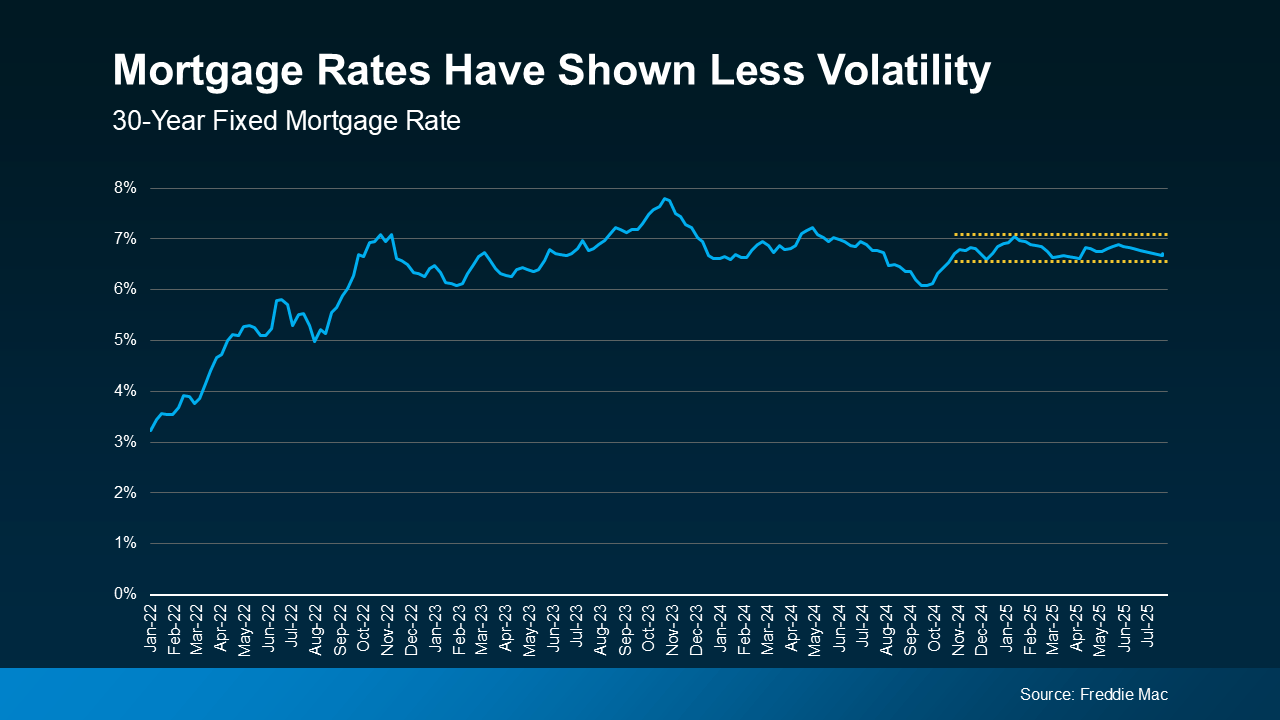
Over the past year, mortgage rates have experienced their share of fluctuations, making it challenging for buyers to predict what to expect. But recently, rates have started to level out and have settled into a more narrow range (see graph below):

a graph of a rateAs the graph shows, rates have remained within that half-percentage point since late last year. Yes, there’s been movement within that range, but wild swings and sudden ups and downs just haven’t been the story lately. And that’s a bigger deal than you may realize. As HousingWire explains:

“Analysts, economists and mortgage professionals are coining this quarter’s activity as one of the most “calm” periods for mortgage rates in recent memory.”

How This Helps Today’s Buyers

Let’s be real. Unpredictability makes it challenging to plan. When rates fluctuate significantly from week to week, it’s easy to feel intimidated. But with rates staying in a pretty steady range over the past several months, you have a clearer picture of what your potential monthly payment could look like. That makes moving feel less uncertain and more doable.

So, stop waiting. And start planning. Even though rates may not be where you want them to be right now, they have been much less volatile for quite some time.

Will This Stability Last?

According to the experts, it appears stability might last for a bit. Rates may come down ever so slightly in the months ahead, but it’ll likely be a slow and mild change. As Danielle Hale, Chief Economist at Realtor.com, says:

“I expect a generally downward trend for rates this year, but at a slow enough pace that it might not be noticeable in any given month.”

So, if you’ve been holding out for the perfect mortgage rate, the best advice is to avoid trying to time the market. It may not look different than the opportunity you already have in front of you. As Jeff Ostrowski, Housing Market Analyst at Bankrate, explains:

“Trying to time mortgage rates is really difficult. There’s no guarantee that rates are going to be any more favorable in three months or six months.”

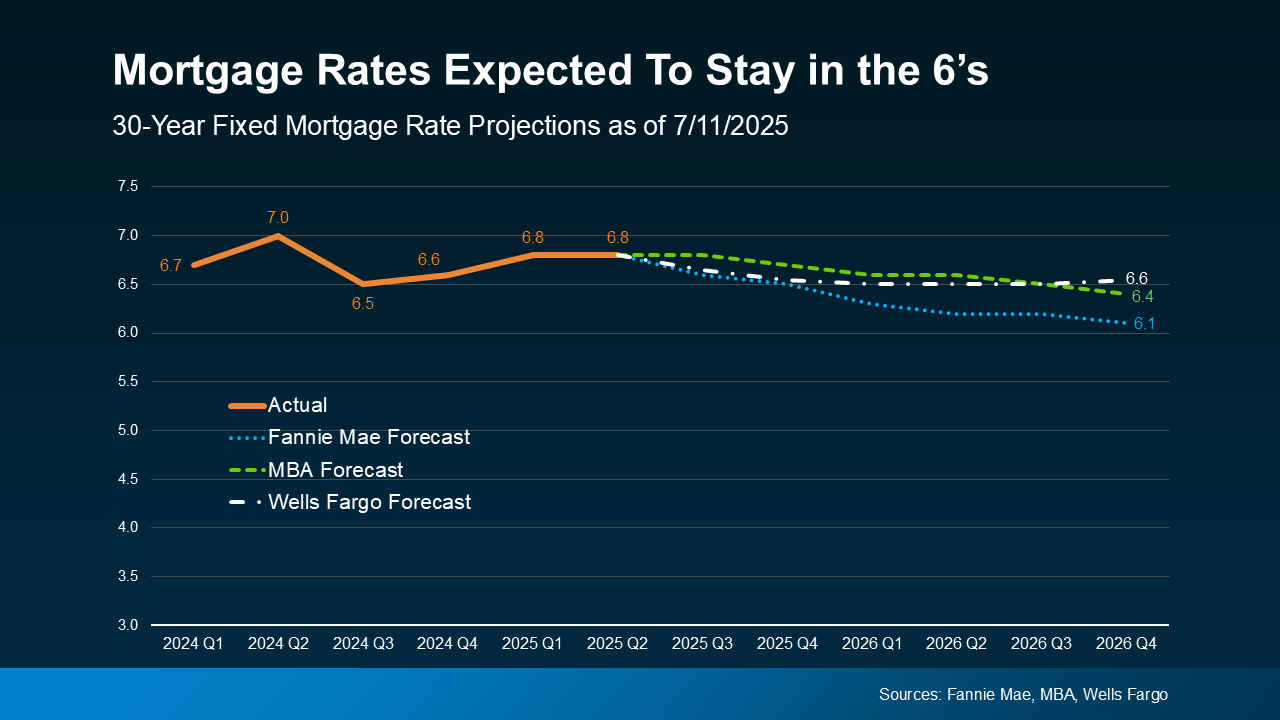
And if we look at the latest expert forecasts that go out a bit further, even those tell much of the same story. Two out of the three projections say rates will still likely be in the mid-6% range by the end of 2026 (see graph below):

a graph of a graph showing the rate of a mortgage rateThis puts today’s buyers in a much better spot. As Sam Khater, Chief Economist at Freddie Mac, explains:

“Mortgage rates have moved within a narrow range for the past few months . . . Rate stability, improving inventory and slower house price growth are an encouraging combination . . .”

Just remember, mortgage rates are still likely to react to changing economic conditions, inflation, and other factors – and that means they could shift again. But right now, you’ve got more predictability, and that means more opportunity, too.

Bottom Line

While affordability remains a challenge, the market may be offering a bit more stability, which makes planning your next move a lot easier.

Let’s connect if you want to run the numbers and see what a monthly payment would look like in today’s market. That way, you can stop waiting and start planning.

Uncategorized July 10, 2025

The Truth About Where Home Prices Are Heading

\

There are plenty of headlines these days calling for a housing market crash. But the truth is, they’re not telling the full story. Here’s what’s actually happening, and what the experts project for home prices over the next 5 years. And spoiler alert – it’s not a crash.

Yes, in some local markets, prices are flattening or even dipping slightly this year as more homes hit the market. That’s normal with rising inventory. But the bigger picture is what really matters, and it’s far less dramatic than what the doom-and-gloom headlines suggest. Here’s why.

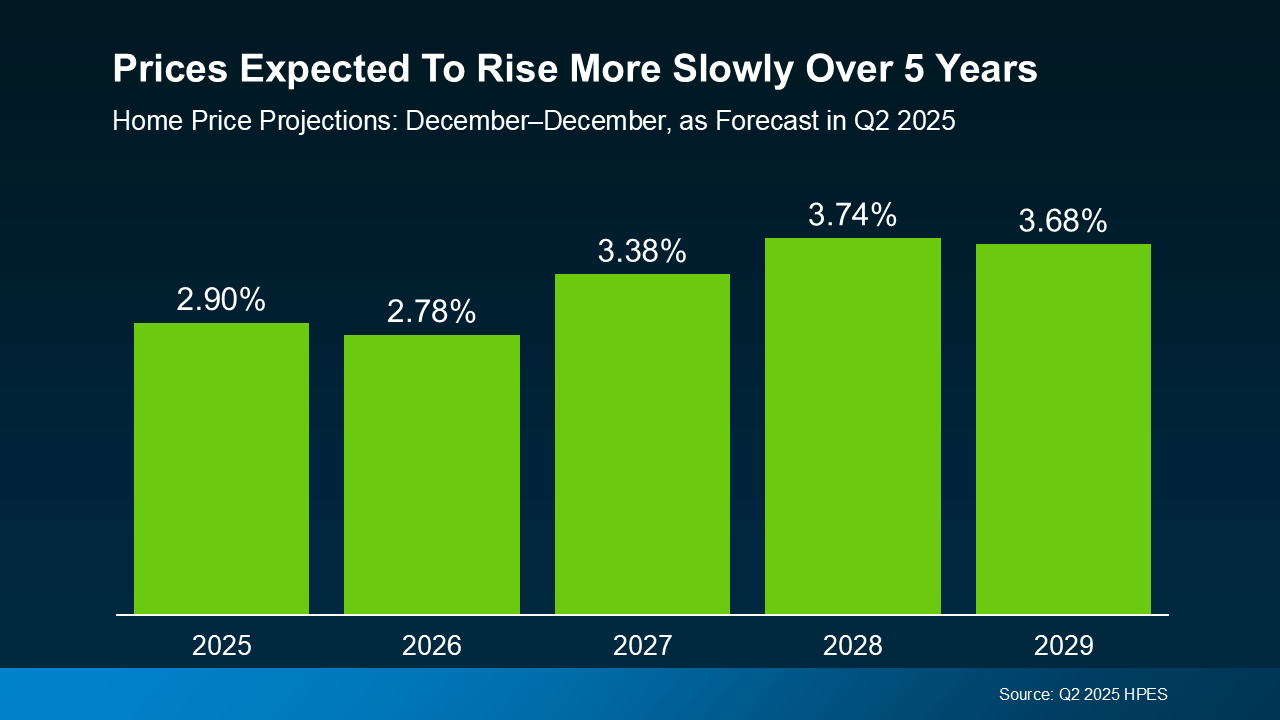
Over 100 leading housing market experts were surveyed in the latest Home Price Expectations Survey (HPES) from Fannie Mae. Their collective forecast shows prices are projected to keep rising over the next 5 years, just at a slower, healthier pace than what we’ve seen more recently. And that kind of steady, sustainable growth should be one factor to help ease your fears about the years ahead (see graph below):

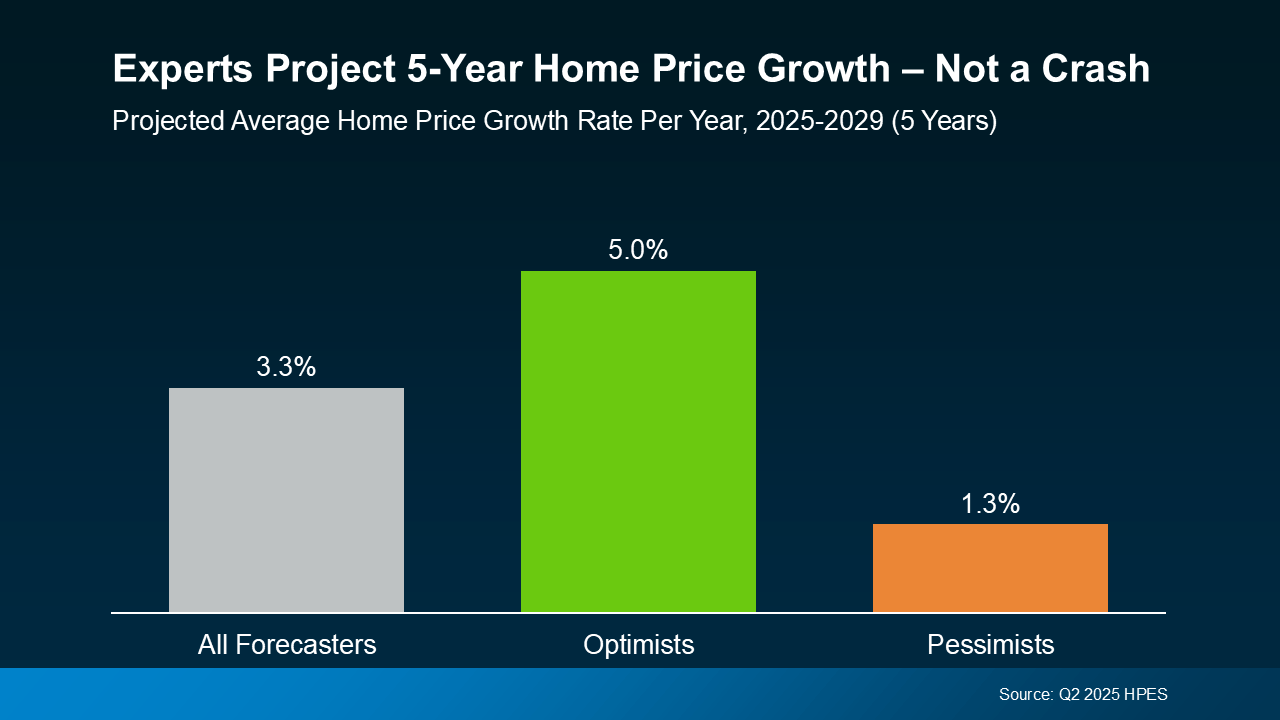
a graph with green barsAnd if you take a look at how the various experts responded within the survey, they fall into three main categories: those that were most optimistic about the forecast, most pessimistic, and the overall average outlook.

Here’s what the breakdown shows:

  • The average projection is about 3.3% price growth per year, through 2029.
  • The optimists see growth closer to 5.0% per year.
  • The pessimists still forecast about 1.3% growth per year.

Do they all agree on the same number? Of course not. But here’s the key takeaway: not one expert group is calling for a major national decline or a crash. Instead, they expect home prices to rise at a steady, more sustainable pace.

That’s much healthier for the market – and for you. Yes, some areas may see prices hold relatively flat or dip a bit in the short term, especially where inventory is on the rise. Others may appreciate faster than the national average because there are still fewer homes for sale than there are buyers trying to purchase them. But overall, more moderate price growth is cooling the rapid spikes we saw during the frenzy of the past few years.

And remember, even the most conservative experts still project prices will rise over the course of the next 5 years. That’s also because foreclosures are low, lending standards are in check, and homeowners have near record equity to boost the stability of the market. Together, those factors help prevent a wave of forced sales, like the kind that could drag prices down. So, if you’re waiting for a significant crash before you buy, you might be waiting quite a long time.

Bottom Line

If you’ve been on the fence about your plans, now’s the time to get clarity. The market isn’t heading for a crash. It’s on track for steady, slow, long-term growth overall, with some regional ups and downs along the way.

Want to know what that means for our neighborhood? Because national trends set the tone, but what really matters is what’s happening in your zip code. Let’s have a quick conversation so you can see exactly what our local data means for you.