Uncategorized May 19, 2025

You Could Use Some of Your Equity To Give Your Children the Gift of Home

If you’re a homeowner, chances are you’ve built up much wealth by living in your house and watching its value grow over time. And that equity? It could help change your child’s life.

Since affordability is still a challenge, many first-time buyers struggle to buy a home in today’s market. Even if they have a stable job and a solid plan, buying can still feel out of reach. But that’s where your equity could make all the difference.

According to Cotality (formerly CoreLogic), the average homeowner with a mortgage has $311,000 worth of equity. That’s significant. Some parents are using a portion of their equity to help their children become homeowners, too.

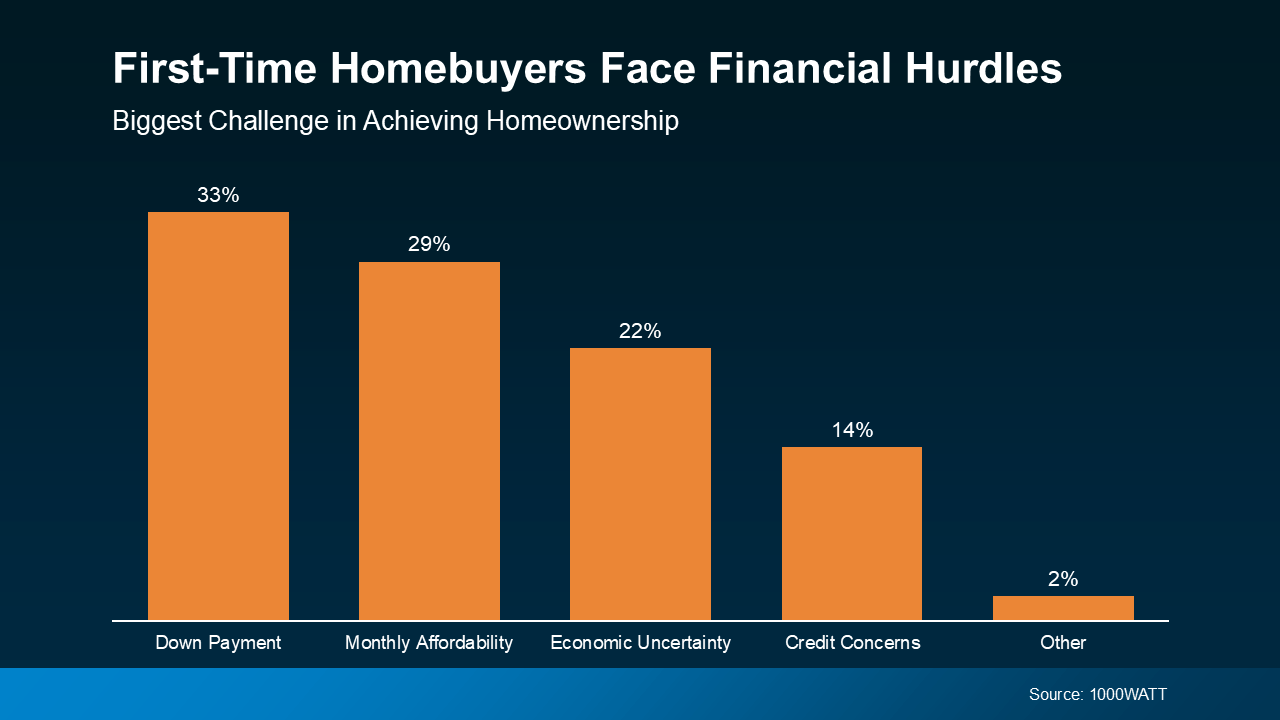
According to Bank of America, 49% of buyers between 18 and 26 got money from their parents to use toward their down payment (see chart below):

a diagram of a graphEven though the data doesn’t specify how many parents used their equity, the wealth they’ve built through homeownership may have helped make it possible, especially given how much equity the average homeowner has today.

While what’s right for each person’s situation will vary on a case-by-case basis, that’s a powerful legacy. It helps younger people buy a home, build equity, and begin the next chapter of their lives with a little less financial stress and a lot more stability. And for those parents, it’s a way to turn what they’ve built into something deeply meaningful.

This isn’t just about money. For many homeowners, it’s about being the reason their child gets to say, “We got the house.” And giving them the head start they might’ve only dreamed of at their age. And here’s the part that sticks. Compare the Markets:

“Of those who did receive monetary aid from parents and grandparents to buy a house, 45% of Americans said they would not have been able to purchase a house without financial support from parents and grandparents.”

Bottom Line

Your equity could be the thing that makes homeownership possible for your children when they might not be able to do it on their own. So, here’s the question.

If helping your kids buy a home was more feasible than you thought, would you want to explore that option?

Talk to your lender and a trusted financial advisor if you want to learn more or find the best way to make it happen.

Uncategorized May 15, 2025

Why Would I Move with a 3% Mortgage Rate?

You’re probably hesitant to let that go if you have a 3% mortgage rate. And even if you’ve toyed with the idea of moving, this nagging thought may hold you back: Why would I give that up?”

But when you ask that question, you may put your needs on the back burner without realizing it. Most people don’t move because of their mortgage rate. They move because they want or need to. So, let’s flip the script and ask this instead:

What are the chances you’ll still be in your house 5 years from now?

Think about your life for a moment. Picture what the next few years will hold. Are you planning on growing your family? Do you have adult children about to move out? Is retirement on the horizon? Are you already bursting at the seams?

If nothing’s going to change, and you love where you are, staying put might make perfect sense. But if there’s even a slight chance a move is coming, even if it’s not immediate, it’s worth considering your timeline.

Because even a year or two can make a big difference in what your next home might cost you.

What the Experts Say About Home Prices over the Next 5 Years

Each quarter, Fannie Mae asks more than 100 housing market experts to weigh in on where they project home prices are headed. And the consensus is clear. Home prices are expected to rise through at least 2029 (see graph below):

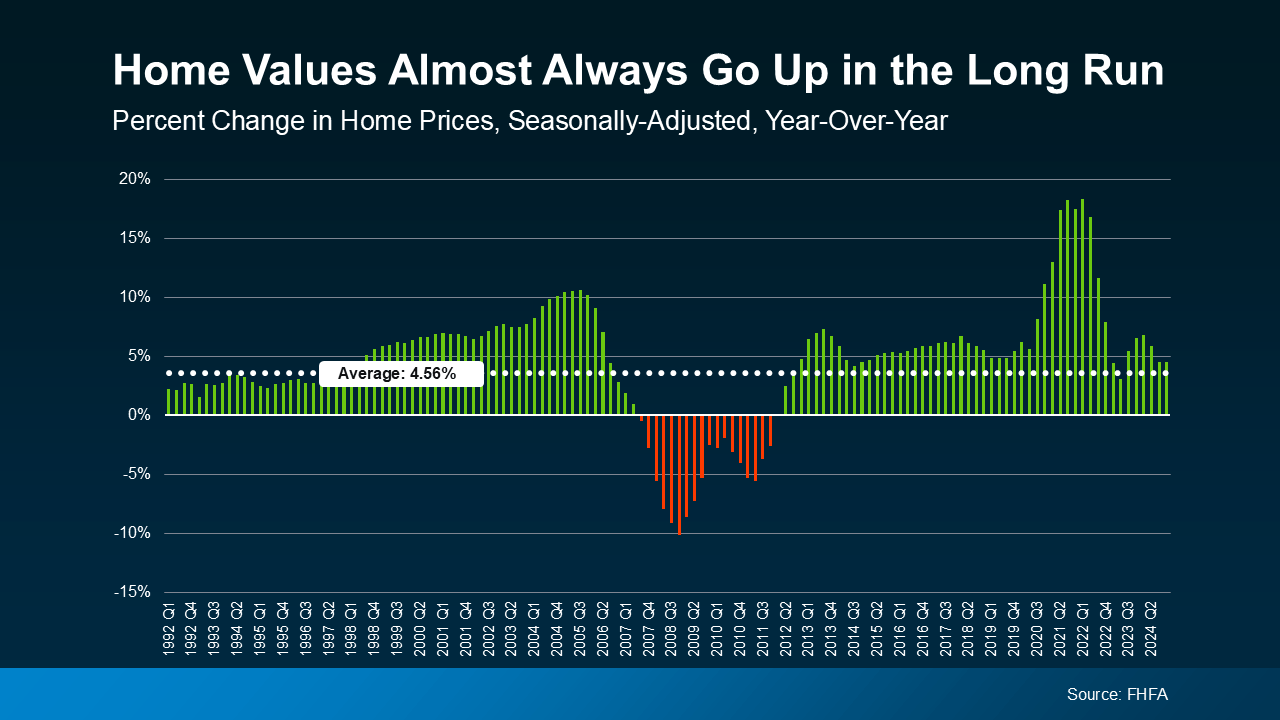
a graph of a graph showing the price of risingWhile those projections aren’t calling for significant yearly increases, it’s still an increase. And sure, some markets may see flatter prices, slower growth, or even slight dips in the short term. But look further out. In the long run, prices almost always rise. And over the next 5 years, the anticipated increase, however slight, will add up fast.

Here’s an example. Let’s say you’ll be looking to buy a roughly $400,000 house when you move. If you wait and move 5 years from now, based on these expert projections, it could cost nearly $80,000 more than it would now (see graph below):

That means the longer you wait, the more your future home will cost you.

If you know a move is likely, it may make sense to rethink your timeline. You certainly don’t have to move now. But financially, it may still be worth conversing about your options before prices increase. While rates are expected to come down, they are not by much. And if you’re holding out in hopes we’ll see the return of 3% rates, experts agree it’s just not in the cards (see graph below):

a graph with lines and numbersSo, the question isn’t: “Why would I move?” It’s: “When should I?” – When the real numbers, waiting, may not be the savings strategy you thought it was. And that’s the best conversation you can have with your trusted agent.

Bottom Line

Keeping that low mortgage rate is smart–until it starts holding you back.

If you are likely to move, even if it’s a few years down the line, it’s worth thinking through the numbers now so you can plan ahead.

What other price point do you want to see these numbers for? Let’s have that conversation, so I can show you how the math adds up. That way, you can make an informed decision about your timeline.

Uncategorized May 14, 2025

Don’t Let Student Loans Hold You Back from Homeownership

Don’t Let Student Loans Hold You Back from Homeownership

Did you know? According to a recent study, 72% of people with student loans think their debt will delay their ability to buy a home. Maybe you’re one of them and you’re wondering:

  • Do you have to wait until you’ve paid off those loans before you can buy your first home?
  • Or could you still qualify for a home loan even with that debt?

Having questions like these is normal, especially when considering a big purchase. But you should know that you may unnecessarily put your homeownership goals on the back burner.

Can You Qualify for a Home Loan if You Have Student Loans?

In the simplest sense, you want to know whether you can still buy your first home if you have student debt. Here’s what Yahoo Finance says:

” . . . student loans don’t have to get in your way when it comes to becoming a homeowner. With the right approach and an understanding of how debt impacts your home-buying options, buying a house when you have student loans is possible.

And the data backs this up. An annual report from the National Association of Realtors (NAR) shows that 32% of first-time buyers had student loan debt (see graph below):

a graph of a student loanWhile everyone’s situation is unique, your goal may be more doable than you realize. Many people with student loans have qualified for and bought a home. Let that reassure you that it is still possible, even as a first-time buyer. And just in case it’s helpful, the median student loan debt was $30,000. As an article from Chase says:

It’s important to note that student loans usually don’t affect your ability to qualify for a mortgage any differently than other types of debt you have on your credit report, such as credit card debt and auto loans.”

Homeownership can still be within reach if your income is steady and your overall finances are solid. So, having student loans doesn’t necessarily mean waiting to buy a home.

Bottom Line

Having student loans doesn’t mean buying a home is off the table. Before you count yourself out, talk to a lender to get a clearer picture of what you can afford and how close you are to taking the first step toward homeownership.

Uncategorized May 13, 2025

Why Buyers Are More Likely To Get Concessions Right Now

Especially in areas where inventory is rising, homebuilders and sellers are sweetening the deal for buyers with things like paid closing costs, mortgage rate buy-downs, and more. In the industry, this is called a concession or an incentive.

What Are Concessions and Incentives?

When a seller or builder gives you something extra to help with your purchase, that’s called either a concession or an incentive.

  • A seller gives up or agrees to a concession to reach a compromise and close a deal.
  • On the other hand, an incentive is a benefit a builder or seller advertises and offers up front to attract and encourage buyers.

Today, some of the most common ones are:

  • Help with closing costs
  • Mortgage rate buy-downs (to temporarily lower your rate)
  • Discounts or price reductions
  • Upgrades or appliances
  • Home warranties
  • Minor repairs

Getting these things thrown in can be a big deal for buyers, especially if you’re working with a tight budget. As the National Association of Realtors (NAR) says:

“. . . they can help reduce the upfront costs associated with purchasing a home.”

Builders Are Making It Easier To Buy

It’s not just one builder willing to toss in a few extras. A lot of builders are using this tactic lately. As Zonda says:

“Incentives continued to be popular in March, offered by builders on 56% of to-be-built homes and 74% of quick move-in (QMI) homes, which can likely be occupied within 90 days.”

They don’t want to sit on inventory for too long. They want it to sell. And according to the National Association of Home Builders (NAHB), one of the strategies many builders are using to keep that inventory moving (and not just sitting) is a price adjustment (see graph below):

a graph of green rectangular barsAround 30% of builders lowered prices each of the first four months of the year. While that also means most builders aren’t lowering prices, it shows some are willing to negotiate with buyers to get a deal done.

This isn’t a sign of trouble in the market; it’s an opportunity for you. The fact that the majority of builders offer incentives and roughly three in 10 are lowering prices means that if you’re looking at a newly built home, your builder will probably try to make it easier for you to close the deal. 

Existing Home Sellers Are Offering More, Too

More existing homes (one that someone has lived in before) have been hitting the market, too, which means sellers face more competition. That’s why over 44% of sellers of existing homes gave concessions to buyers in March (see graph below):

a graph showing the price of a stock marketAnd, if you look back at pre-pandemic years on this graph, you’ll see 44% is pretty much returning to normal. After years of sellers having all the power, the market is balancing again, which can work in your favor as a buyer.

But remember, concessions don’t always mean a significant discount. While more sellers are compromising on price, that’s not always the lever they pull. Sometimes it’s as simple as the seller paying for repairs, leaving appliances behind for you, or helping with your closing costs.

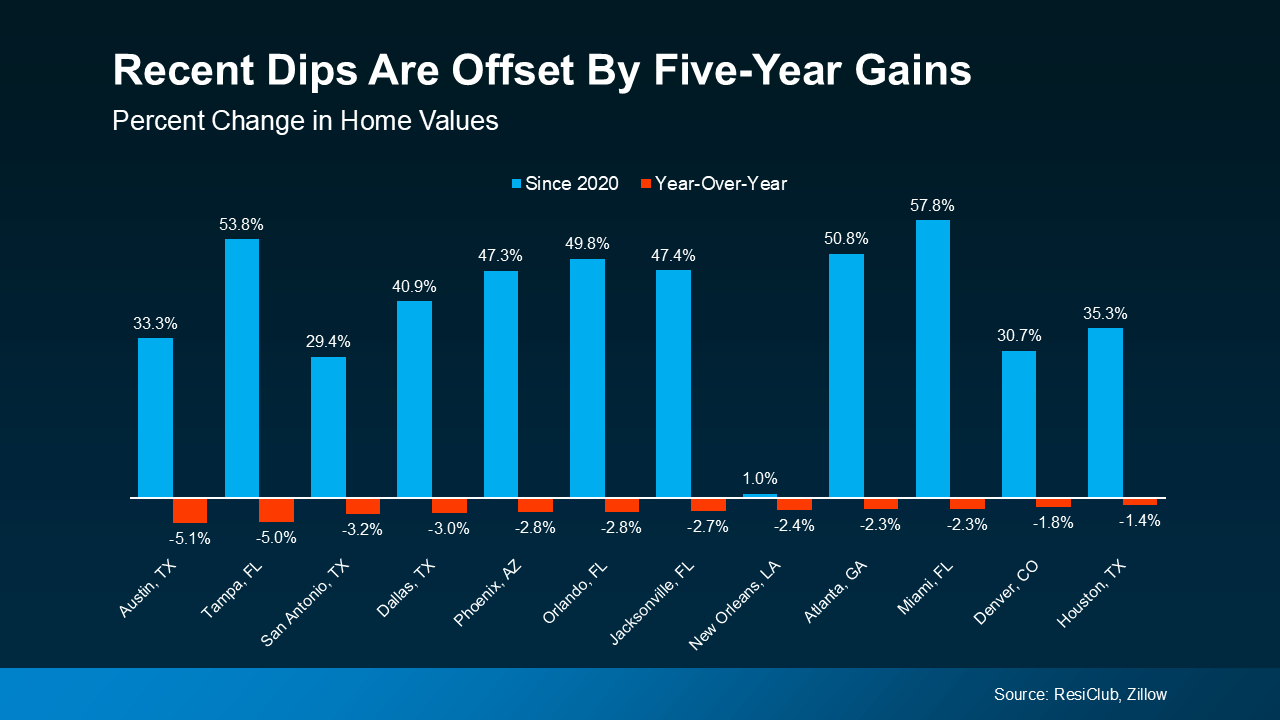
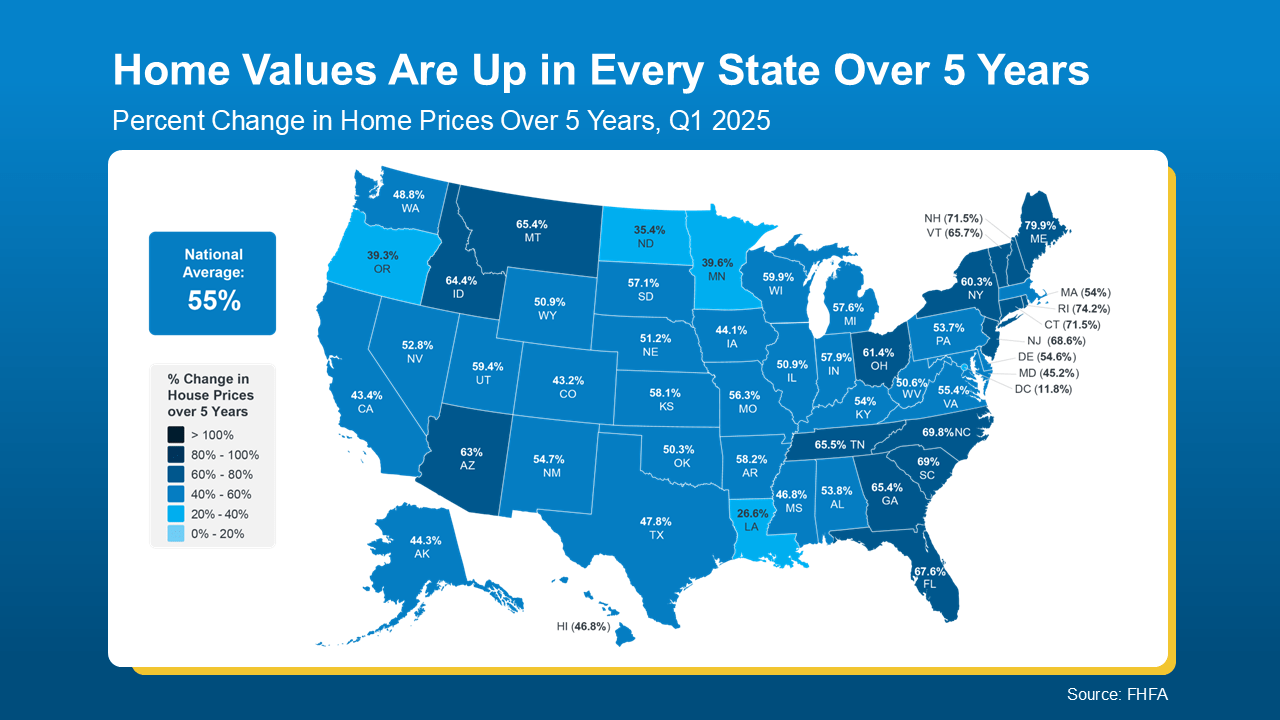
And considering that home values have risen by more than 57% over the past five years, small concessions are a great way for sellers to make a house more attractive to buyers while still making a profit.

Bottom Line

Whether you’re looking at a newly built home or something a little older, there’s a good chance you can benefit from concessions or incentives.

If a seller or builder offered you something extra, what would make the most significant difference to help you move forward?

Let’s discuss it and see if it’s realistic based on inventory and competition in our local market.

Uncategorized May 12, 2025

Home Projects That Boost Value

Home Projects That Boost Value

Whether you’re planning to move soon or not, it’s smart to be strategic about which home projects you take on. Your time, energy, and money matter – not all upgrades offer the payoff you might expect. As U.S. News Real Estate explains:

“. . . not every home renovation project will increase the resale value of a home. Before you invest in a swimming pool or new addition, you should consider whether the project will pay itself off by getting prospective buyers in the door when it’s time to sell.

That’s why, be your first step should be talking to a local agentore you pick up a power tool or call a contractor, yoanning Pays Off

If you plan to move relatively soon, you’ll want to get a jump start on your to-do list. And even if moving isn’t on your radar yet, life can change quickly, and a new job, a growing family, or shifting priorities can fast-track your plans. If your timeline changes, you don’t want to scramble to fix your home.

Smart updates now = fewer headaches later.

By planning, you can spread the work over time, which is easier on your wallet and stress levels. Plus, you’ll enjoy the upgrades while you’re still living there and have the peace of mind that your house is ready to impress when it’s time to list.

What Buyers Want (and What’s Actually Worth Doing)

If you’re unsure which projects are worth your time and money, here’s some information that can help. A study from the National Association of Realtors (NAR) shows which upgrades typically offer the best return on your investment (ROI) (see graph below):

a graph of a costIf an update you’re already thinking about overlaps with those high-ROI upgrades, great. Oddly, save that it’ll improve your quality of life and your home’s value later.

But don’t take this list as law. This is based on national data and is the sort of thing that’s going to vary based on what’s most sought-after where you live. That’s where your agent comes in. As an article from Ramsey Solutions says:

The best way to gauge what you can expect in terms of resale value on home improvements—especially if you’re planning to sell soon—is to talk to a real estate agent who is an expert in your market. They’re sure to know the local trends, and they can show you how other homes with the features you want to add are selling. That way, you can make an educated decision before you start ordering lumber and knocking down walls.”

You’ll want to make sure you don’t overdo it. Too many high-end updates can make your home the priciest in the neighborhood. That might sound great, but it can turn buyers away if it’s outside their expected price range for the area. The right agent will help you make smart updates that buyers will love, without going overboard.

Whether the project is big or small, it pays to be strategic. And an agent is a key piece of that strategy.

Bottom Line

It doesn’t matter whether you plan to move soon or not; it can still pay off to make strategic updates that’ll help you love your home now and stand out later.

What’s one upgrade you’ve been thinking about and wondering if it’s worth it? Let’s make sure it’ll pay off when the time comes.

Uncategorized May 9, 2025

Why You’ll Want a Home Inspection

Uncategorized May 8, 2025

Housing Market Forecasts for the Second Half of the Year

From rising home prices to mortgage rate swings, the housing market has left many people wondering what’s next – and whether now is the right time to move. There is one place you can turn to for the answers you want the most. And that’s the experts.

Leading housing experts are starting to release their projections for the rest of the year. These insights will give you clarity – and a little more optimism than you might expect. Business Insider sums up the forecasts (and why they’re good news for you):

“As mortgage rates go down this year, affordability may improve slightly for homebuyers. Inventory is also expected to grow, which should help moderate price growth and make finding a home easier.”

Let’s break it down.

1. Mortgage Rates Should Come Down (Slightly)

While a significant drop isn’t on the table, forecasters are calling for a modest rate decline in the months ahead as the economic outlook becomes more certain. Based on the information we have right now, here’s a look at where they say rates should be by year-end (see graph below):

a graph of interest rateEven this slight decrease is a welcome change. A small decline can still help bring down your future mortgage payment and give you more breathing room in your budget.

Remember, everything from inflation to employment and broader economic shifts will impact where rates go from here. So, don’t try to time the market. And do expect some volatility along the way.

2. Inventory Will Continue To Grow

Inventory has already improved a lot this year. A significant portion of the growth the market has already seen is because homeowners are tired of sitting on the sidelines. They’ve tried the wait-and-see approach with rates, which hasn’t paid off. And at a certain point, you need to move no matter what the market is doing. This is one reason more homes have been listed lately. And experts say that should continue. As Lance Lambert, Co-founder of ResiClub, says:

“The fact that inventory is rising year-over-year . . . strongly suggests that national active housing inventory for sale is likely to end the year higher.

If rate forecasts pan out as the experts say, that could be enough to tip some more sellers off the fence and back into the market, giving you even more options for your move.

3. Home Prices Are Moderating

As more homes hit the market, there will also be less upward pressure on home prices. Expert forecasts are still calling for growth, but the pace of that growth is slowing down as inventory climbs. The average of all 7sevenforecasts shows prices will rise about 2% this year (see graph below):

a graph of growth in green squaresThat means you could finally get some relief from rapidly rising home prices. Combining the forecast for healthier price growth with projections for slightly lower mortgage rates could mean more buying power in the months ahead.

Keep in mind, though, the housing market is hyper-local. So, this is going to vary by area. Some markets will see prices climbing higher. And some may even see prices dip a little if inventory is up significantly in that location. So, lean on a local agent for insights into what’s happening in your area.

Bottom Line

So, if you want or need to move this year, know that the experts say things should start looking up. Let’s connect to take advantage of any market shifts that work in your favor.

Uncategorized May 6, 2025

Stocks May Be Volatile, but Home Values Aren’t

The stock market has been bouncing around more than usual with all the economic uncertainty. And if you’ve been watching your 401(k) or investments lately, you’ve probably felt that pit in your stomach. One day it’s up. The next day, it’s not. And that may make you feel a little worried about your finances.

But here’s what you need to remember if you’re a homeowner. According to Investopedia:

Traditionally, stocks have been far more volatile than real estate. That’s not to say that real estate prices aren’t ever volatile—the years around the 2007 to 2008 financial crisis are just one memorable example—but stocks are more prone to large value swings.”

While your stocks or 401(k) might see a lot of highs and lows, home values are much less volatile.

A Drop in the Stock Market Doesn’t Mean a Crash in Home Prices

Take a look at the graph below. It shows what happened to home prices (the blue bars) during past stock market swings (the orange bars):

Home prices don’t always come down even when the stock market falls more substantially.

Big home price drops like those in 2008 are the exception, not the rule. But everyone remembers that one. That stock market crash was caused by loose lending practices, subprime mortgages, and an oversupply of homes – a scenario that doesn’t exist today. That’s what made it so different.

In many cases, home values went up before and after that time while the stock market went down, showing that real estate is generally much more stable.

This graph shows how stock prices go up and down (the orange line), sometimes by more than 30% in a year. In contrast, home prices (the blue line) change more slowly (see graph below):

a graph of a price chartStock values jump around a lot more than home prices do. You can be way up one day and way down the next. On the other hand, real estate isn’t usually something that experiences such dramatic swings.

That’s why real estate can feel more stable and less risky than the stock market.

So, if you’re worried after your stock portfolio’s recent ups and downs, rest assured, your home isn’t likely to experience the same volatility.

And that’s why homeownership is generally viewed as a preferred long-term investment. Even if things feel uncertain, homeowners win in the long run.

Bottom Line

A lot of people are feeling nervous about their finances right now. But there’s one reason for you to feel more secure – your investment in something that’s stood the test of time: real estate.

Uncategorized May 5, 2025

The 20% Down Payment Myth, Debunked

Saving up to buy a home can feel intimidating, especially now. And for many first-time buyers, the idea that you have to put 20% down can feel like a significant roadblock.

But that’s a common misconception. Here’s thHere’sh.

Do You Have to Put 20% Down When You Buy a Home?

You won’t have to unless your specific loan type or lender requires it. There are loan options designed to help first-time buyers like you get in the door with a much smaller down payment.

For example, FHA loans offer down payments as low as 3.5%, while VA and USDA loans have no down payment requirements for qualified applicants, like Veterans. So, while putting down more money does have its benefits, it’s not essential. As The Mortgage Reports says:

“. . . many homebuyers are able to secure a home with as little as 3% or even no down payment at all . . . the 20 percent down rule is really a myth.

According to the National Association of Realtors (NAR), the median down payment is a lot lower for first-time homebuyers at just 9% (see chart below):

The takeaway? You may not need to save as much as you initially thought.  

The best part is that there are also a lot of programs out there designed to boost your down payment savings. And chances are, you’re aware they’re aware they’re aware.

Why You Should Look into Down Payment Assistance Programs

Believe it or not, almost 80% of first-time homebuyers qualify for down payment assistance (DPA), but only 13% use it (see chart below):

a blue and orange pie chartThat’s an opportunity. These programs aren’t a smaren’a tale help, either. Some offer thousands of dollars that can go directly toward your down payment. As Rob Chrane, Founder and CEO of Down Payment Resource, shares:

Our data shows the average DPA benefit is roughly $17,000. That can be a nice jump-start for saving for a down payment and other costs of homeownership.”

Imagine how much further your homebuying savings would go if you qualify for $17,000 worth of help. In some cases, you may even be able to stack multiple programs at once, giving you an extra lift. These are the types of benefits you don’t want to leave the table.

Bottom Line

Saving up for your first home can feel like a lot, especially if you’re considering putting 20% down. The truth is that many loan options require much less, and even programs are designed to boost your savings, too.

Talk to a trusted lender to learn more about what’s available and if you’d qualify for any down payment assistance programs.

Uncategorized May 2, 2025

Your Home Equity Could Make Moving Possible